(1807-1870)
Robert E Lee was born on January 19, 1807 in Stratford Virginia. He was the proud son of Henry and Anne Hill Lee. Robert E Lee’s father fought in the Revolutionary War as a cavalry officer. Lee’s father acquired the unfortunate nickname “Light Horse Harry”.
He was called this because of his ever increasing financial problems. Robert E. Lee grew up in Alexandria Virginia. In 1825, Lee entered the US Military Academy at West Point where he did very well he graduated 2nd in his class in 1829.
After he graduated Lee became a second lieutenant in the United States army. In 1831 Lee married Mary Ann Randolph Custis. They eventually had seven children together. During the Mexican war Lee distinguished himself and received several promotions in rank after the war ended. After the war Lee briefly served as superintendent of West Point, followed by his taking command of the 2nd US Cavalry.
Starting in 1860 the talk of secession and forming an independent country by southern states was becoming more and more widespread.
Robert E Lee Joins the Confederacy
Lee and his family lived in Arlington Virginia, which is directly across the Potomac River from Washington. Lee never supported the idea of a revolt against the nation to which he had sworn an oath.

General Robert E. Lee
In 1861 The south seceded, Virginia included. Back then people thought of their state as their country so naturally when Virginia changed sides Lee had to go with his “country” Lee resigned from the United States army and joined the southern cause for independence.
Lee was more of a paper pusher than a field general at this time. Things eventually took a dramatic turn for Lee.
Robert E Lee takes command of the Army of Northern Virginia
In the beginning of 1862, General George McClellan’s Union Army of the Potomac were ready to attack the Confederate capitol of Richmond, Virginia and hopefully end the war. In the battle at Seven Pines, the commanding general of the Confederate army was badly wounded and Lee was assigned to command the Confederate army. Lee renamed it the Army of Northern Virginia.
This was actually the first time that Lee had even commanded troops in actual combat. Fighting alongside Thomas “Stonewall” Jackson in the Shenandoah Valley, Lee attacked the Union army on two sides.
Jackson made short work of the Union troops in the Valley, He then raced his troops to Richmond and joined with General James Longstreet’s Corps in attacking Union forces there. Together, Lee and his officers were able to defeat McClellan’s forces in a series of battles called The Seven Days. Lee had saved Richmond from the Union.
General Lee’s army was always outnumbered, Lee was smart however and understood battlefield tactics and with an engineer’s sense and the support of excellent commanders, he was able to constantly defeat the Union Army time and again.
It wasn’t all victories for Lee however, he had several defeats during the Maryland Campaign in 1862 which developed into the Battle of Antietam. Lee did technically win the battle of Antietam since it was his army that remained on the field. However his men had no strength to continue to attack the Union army and Lee was forced to retreat.
In December of 1862 after the battle of Fredericksburg, both sides spent the winter rebuilding their armies for renewed attacks in the Spring. The Union attacked first striking Lee’s army starting the Battle of Chancellorsville in Virginia.

Confederate General Robert E. Lee
Robert E Lee turned this attack into a great southern victory and this truly made him a hero in the south, unfortunately during this battle perhaps Lee’s greatest General “Stonewall” Jackson was mortally wounded by his own troops. Lee had no choice but to continue the fight and even invaded the north once again. Lee and his troops marched through Maryland and southern Pennsylvania until they came to a little place in July of 1863 called Gettysburg.
This was a battle the south was not destined to win. His loss here was a crushing defeat for the Army of Northern Virginia and Robert E Lee took the loss very personally even attempting to resign but the Confederate government would not accept his resignation.
Robert E Lee fights Ulysses S Grant
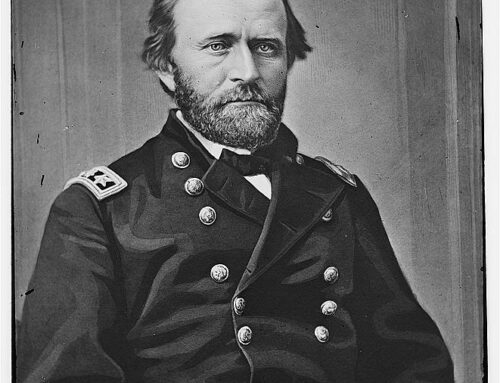
In 1864 the Union army finally found a general that could match and even beat Lee on the battlefield. This was General Ulysses S. Grant. Grant had many victories in Tennessee and Mississippi which prompted President Abraham Lincoln to give him command of all of the Union Armies.
The defeat of Robert E Lee was the key to end the war, Grant new this and chose to challenge Lee in a strategic duel in the spring of 1864. The Wilderness Campaign pitted the two armies against each other continuously for many weeks through middle Virginia southward toward Richmond. The fighting was tough and Lee was able to block every attack that Grant made.
Lee could never win a war like this, he was running out of men. His men could never be replaced but for Grant he always had a steady supply of fresh troops to throw into battle. General Grant moved his forces around Richmond to Petersburg, Virginia, an important railroad junction for the south. Grant was stopped and defenses were built by Lee’s troops.
Robert E Lee was even so bold as to attack Maryland once again with a portion of his army led by General Jubal Early. This attack actually succeeded in reaching the outskirts of Washington before they decided to return back to Virginia.
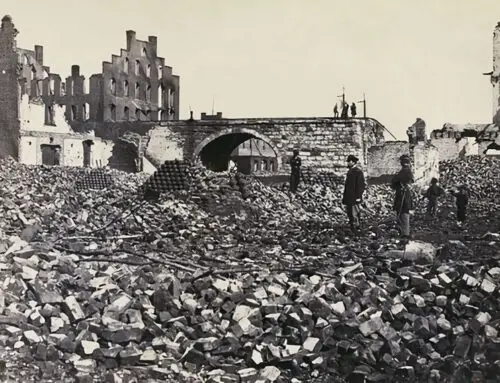
Robert E Lee knew that his army could never last through a drawn out siege but he refused to give up even against a growing force of two armies. Early in 1865 Lee made one last desperate attack to break the Union siege however this was a failure. At this point nothing left could be done to break the Siege of Petersburg or prevent the Fall of Richmond and Lee was forced to retreat.
The Army of Northern Virginia Surrenders
After his retreat Lee hoped he would be able to join the remainder of his army up with General Joseph Johnston’s Army in North Carolina. Despite his best efforts, Lee knew that the war was over and along with his few surviving soldiers stopped near Appomattox Court House, Virginia on April 9, 1865.
Here General Robert E Lee, dressed in his finest uniform, surrendered the remains of the Army of Northern Virginia to General Grant.
Robert E Lee at this time had only 7,500 remaining soldiers in his entire army.
After the surrender Lee returned to Richmond. This was probably the lowest point in his life, most northerners saw him as nothing more than a traitor who should be hanged.
Robert E Lee After the Civil War
In late 1865, Lee was offered and accepted the position of president of Washington College in Lexington, Virginia. Robert E Lee brought the school up to a very high standard of education.
He also encouraged his former soldiers to return home and restart their lives as Americans not just southerners.
Lee never discussed the war and he never wrote about his war-time experiences. On October 12, 1870, General Robert E Lee suddenly died after a short illness and is buried in the chapel of Lee University.