May – June 1864
The Wilderness Campaign saw General Lee outnumbered and overwhelmed, he knew that the outcome of the battles to come, were certainly in doubt. His army had fought gallantly and without dishonor but this time, this place, Lee would meet his match.
The Wilderness Campaign is the moniker given to the various battles and skirmishes of The Civil War in the state of Virginia. The Union army under the expert watch of General Grant would prove to be enduring adversaries if not suitable man-to-man opponents.
The numbers were on the side of the Union army; estimates vary yet the best estimates are that the north had 125,000 and the south only 70,000. Although that set of numbers does not seem to be so far off, it was the ability of the north to receive fresh reinforcements almost daily.
The south under Lee was not so fortunate and could barely receive food and water supplies. The year was 1864 and the war had ravaged the country for almost three years. The north was edging closer to the heart of the south and General Grant was well aware that a victory in Virginia would send a clear and present message to the Confederates, a message that said it is over.
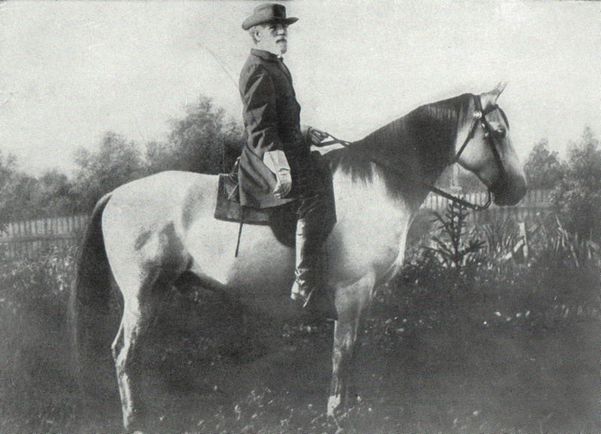
Robert E. Lee on his horse Traveler
One of the first skirmishes occurred near a wooded area called The Wilderness. General Meade, under the direction of General Grant, launched an all out attack against the Confederates that would be the start of a very bloody encounter.
The Union losses were catastrophic as the Confederates dug in and fought gallantly against the numerous northern soldiers.
The Union army was winning each battle in the campaign but the losses were so heavy that the northern populace was getting bitter. They called for the resignation of General Meade and Grant but to no avail. Grant was crazy, crazy like a fox. Although he knew the loss of men would mean condemnation from his supporters, he was well aware of the south’s inability to resupply.
Time and numbers were on Grant’s side and it was these two factors that won the battle for the north.
When the dust had settled, the Union army had suffered immense losses, 60,000 men of the blue lost their lives in the campaign. A gruesome number for a piece of land that was meaningless in the war. The only positive aspect of the battles for the north was that Grant was edging closer to his goal, the city of Richmond, Virginia.
If Grant could silence the angry mob mentality back in Washington, while staying ahead of the Confederate army, he might just close at this terrible war in a few months.
The durability of the south was wearing thin as a loss of 10,000 men was immense. The beginning of the end was at hand but not because of the outcome of The Wilderness campaign, it was the inability of the south to keep fresh troops in and resupplies coming.