(1821-1904)
General Lee called Longstreet, “Old War Horse” a nickname that would prove to be correct in that he was a great war commander and lived to a very old age of 83.
His victories in the Civil War were many and included some of the most pivotal of the entire conflict.
As Lee’s right hand man, He was both a tactical master and competent leader.
His most controversial moment came in Gettysburg, when he disagreed and rightfully so, regarding the offensive plans of Lee. The disaster at Gettysburg did not stop him from having a stellar career as a Confederate commander. In as much as any other general in the Confederacy, He was viewed as one of the best performing leaders.

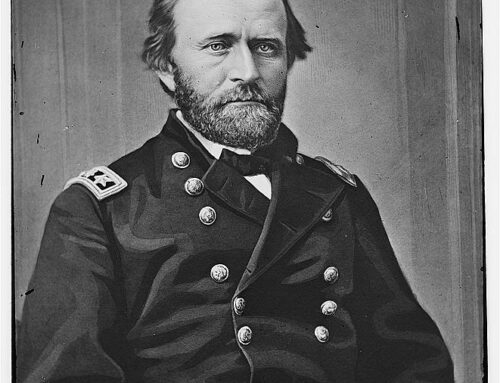
James Longstreet during the Civil War
Born in upstate South Carolina, he was destined to become a military man from the very start. Graduated from West Point, although not a particularly heady student, he enlisted into the Army of the Confederacy in 1861.
Married twice, he fathered ten children within both marriages. An interesting development was that when he wrote his memoirs he never once mentioned his first wife, Louise Garland.
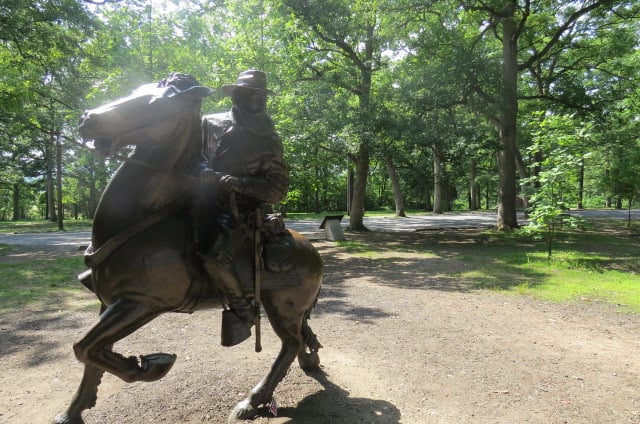
General James Longstreet statue at Gettysburg
His military talents were demonstrated in Confederate victories at Second Bull Run and Fredericksburg. Yet it was The Battle of Gettysburg that would be recalled by many as his guiding moment. Some speculate to the point that his inability to provide adequate offensive movement in the ill-fated charge with Pickett was one of the major reasons the Confederates lost the Civil War.

James Longstreet long after the Civil War
Others support him in defense of his arguments with Lee at Gettysburg. The final outcome would show that the “fault” really was no fault at all, for it was the Union army that was the cause of the failure. After The Battle of the Wilderness ended, he was defeated at Knoxville, Tennessee and bounced back with a strong supporting role at the Second battle of Bull Run with Lee. As a secondary commander, he proved invaluable and efficient.
It was when he was giving the reigns in a battle that most of the time ended up in failure.
After staying by the side of General Lee all the way to the signing of the official Confederate surrender at Appomattox. He showed intense loyalty to the Confederate cause. This did not go unnoticed after the war as he enjoyed successful governmental duties both at home and abroad.
He was the Ambassador to the Ottoman Empire under Grant and served various political offices for Roosevelt and McKinley. Although highly condemned by many former Confederates, he fought back with a scathing book about the war entitled, “From Manassas to Appomattox.” In the book he explained what it was like to be from West Point and yet serve in the Confederate forces.
The duality of being seen as a true American with southern values and goals for the Confederacy. He died in 1904 at Gainesville, Georgia where he is buried today.