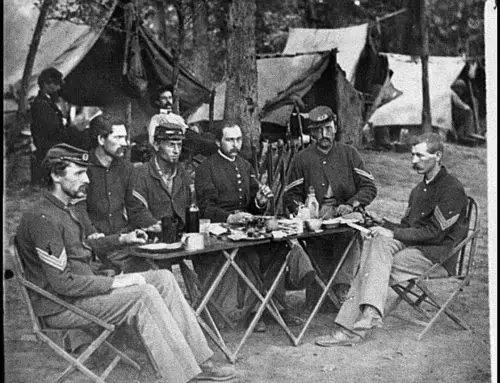
(1820-1891)
William Tecumseh Sherman was a Civil War general who is best remembered for his military tactical ability but also his “scorched earth” policy in the Civil War. In the course of the modern history of war, no other general or leader could compare to the sheer brilliance of Sherman’s tactical maneuvers.
He gets bad remarks concerning the way that he handled the defeated Confederates but his winning ways on the battlefield are legendary. Graced with great intelligence and a lion’s heart, Sherman assisted the Union in defeating the Confederates more so that any other leader.
Sherman served under the command of Ulysses S. Grant in 1862 and 1863. He accompanied the great General Grant in the campaigns at Vicksburg and Tennessee.
His routing of the Confederates in the state of Tennessee was one of the reasons that Sherman was considered almost barbaric in his treatment of the defeated Confederates.
Born in 1820 in Lancaster, Ohio, Sherman found himself left with his mother and 10 siblings following the unexpected death of his father, Charles Sherman. Sherman’s mother, Mary Sherman, was left to raise the giant family by herself with no money since her husband failed to write out a will.
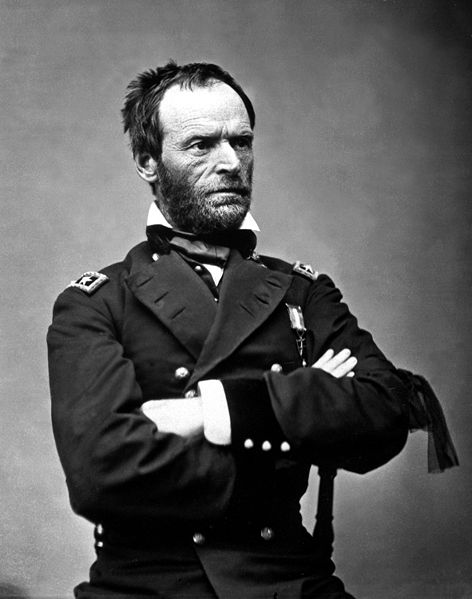
William Tecumseh Sherman
This proved to be too much for the widow and Sherman was left to a good friend of the family in Lancaster to be raised. This stroke of tragedy turned good fortune for young Tecumseh since the family friend was a prominent member of The Wig Party. His military career was set. William Tecumseh Sherman received an appointment to West Point where he was considered to be one of the brightest cadets at the legendary military academy.
It was his penchant for a good joke and his disdain for the strict code of behavior that set Sherman apart from the rest of his fellow classmates. In his own words, Sherman would recall his days at the academy as both enlightening and dark.
He was brilliant at all the standard subjects, math English science history, but was a trouble spot for the faculty. He remained a private his entire four years at West Point while the other cadets were given officer status through brevets and appointments.
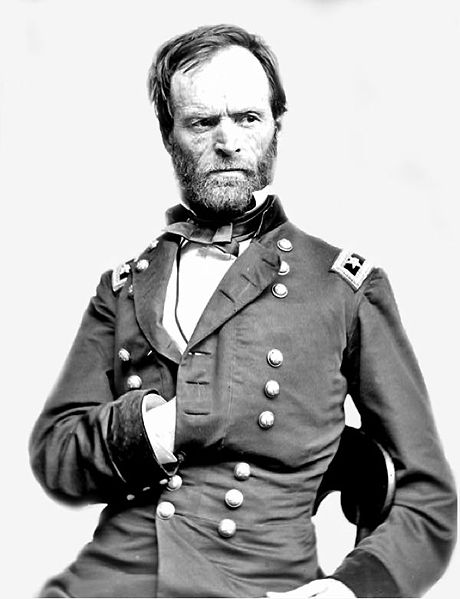
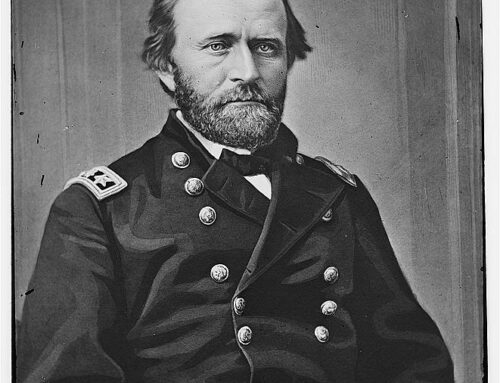
General Sherman taken in the Civil War
At the first battle of Bull Run, a miserable showing for the Union army, Sherman stood out as a leader who knew the art of war. President Lincoln saw this and promoted Sherman to general in 1861. Sherman was said to have suffered a nervous breakdown while leading his army in the states of Kentucky and Missouri. This is told by eyewitness accounts of Sherman by family and military colleagues.
Insanity claims were arising against Sherman so the military sent him back to Ohio for recuperation and rest. After some time Sherman was rested and ready to lead and it was a good thing for the Union that he did.
Sherman’s legend was confirmed at the battle of Shiloh with General Grant and his troops. Sherman, unwilling to boaster his defenses and send out scout parties to look for Confederate troops, seemed destined for failure at Shiloh.
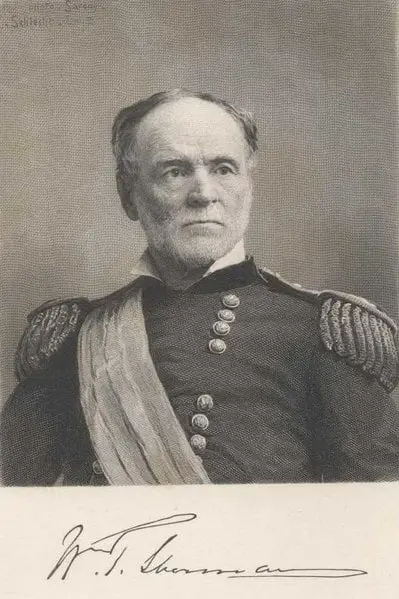
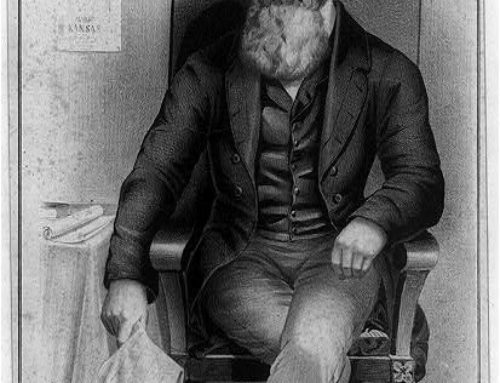
Portrait of an older General Sherman
Just the opposite occurred, as Sherman was able to rally his troops and although forced to retreat with Grant, saved the Union from a devastating massacre. The next day he would gather his troops and once again under the direction of General Grant, would defeat the Confederates at Shiloh.
A great turn of events for both William Tecumseh Sherman and Grant. Rumors abound about the unlikely duo to their ability to further lead the Union cause. The drunkard and lunatic were the rude remarks left by the citizens of the Union even after both generals were winning on the battlefield.
After the Civil War, Sherman kept far way from any political office and instead wrote a brilliant account of the war. “Memoirs of General William T. Sherman. By Himself” would prove to be a valued and treasured resource for a first hand account of the war through the eyes of a brilliant commander. Sherman is quoted with one of the most famous lines in military history in a speech he delivered at West Point in 1879. “War is hell.”
That description of the terror of battle is defined by its’ brevity and full detail of what war really is. Sherman died in 1891 in New York City. A more valued commander, the north had never known.