(1818-1885)
Irvin McDowell was involved in many of the Civil War’s greatest battles. From fighting in the battles of Bull Run and many other battles during the Civil War, General McDowell saw plenty of action. Tactical instructions were the name of his game and he did very well at outsmarting many of his Rebel adversaries in Cedar Mountain.
It was the Battle of Bull Run that shook the foundations of an otherwise decent military career.
Born in Ohio and educated in France, Irvin McDowell was a very intelligent, leader from the start. Graduating from West Point in 1838, the leader-to-be was seen as a go-getter.
Going after what he desired was the main force that drove McDowell’s life and career as a Civil War leader. The stage was set for the man from Ohio to lead his men into battle in the Civil War.
The first action McDowell was to see in the war was as the commander of the forces that protected Washington D.C. Given the command of fresh new recruits; General McDowell was ordered to attack the Confederate army near the Bull Run river in Northeastern Virginia.

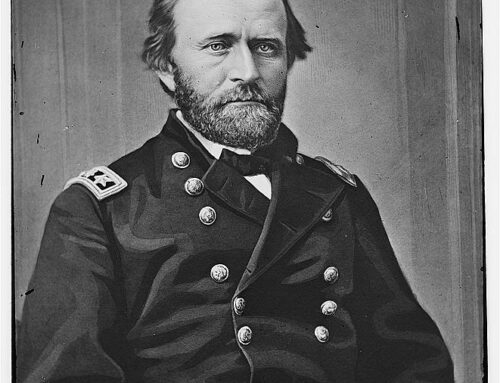
General Irvin McDowell
This battle would become the First Battle of Bull Run. The battle was a disaster for the Union army. The loss sent a clear message to the Union army that perhaps General McDowell might not be the commander that would lead them to ultimate victory. After the battle he was relieved of his command and replaced by George McClellan.
McClellan took control of the army and went on to attack the Confederates in the Peninsula Campaign. McDowell remained in command of a small force near Washington DC to protect it from attack. The Southern commander Thomas “Stonewall” Jackson had amassed an army in the Shenandoah Valley and it was up to McDowell and his Corps to fend them off if they attempted to attack the capital.
McDowell eventually was ordered to attack Jackson in the Shenandoah Valley where he was defeated by the skillful Jackson. After the battle of Bull Run and others in the Shenandoah Valley Campaign the general was ordered to go into Cedar Mountain.
Here he would give a good showing and prove that he was a competent commander. Unfortunately for McDowell this was not enough. He was officially blamed for the defeat at Bull Run. Irving McDowell would not take the blame lying down. The embattled general petitioned the high court for a hearing. Cleared of culpability, the general was given command for the last time in the Department of the Pacific in 1864.
General Irving McDowell retired from the military in 1882. The general died in 1885.