The battle of Gettysburg is the most well known battle of the American Civil War. The battle lasted for three days from July 1st to July 3rd 1863. When it was over more than 8,000 soldiers on both sides would be dead.
Why Was the Battle of Gettysburg a Turning Point in the Civil War
The Battle of Gettysburg is considered a turning point in the Civil War because it was the last time the Confederates were able to threaten the North. For almost two years after Gettysburg the south was forced onto the defensive ultimately losing the war.
Why Was the Battle of Gettysburg So Important
Gettysburg is important because it was the high water mark of the Confederacy.
Battle of Gettysburg Facts
- Location: Adams County Pennsylvania
- Campaign: Gettysburg Campaign (June-August 1863)
- Date of Battle: July 1st to July 3rd 1863
- Commanders: Union Maj. Gen. George G. Meade vs Confederate General Robert E. Lee
- Forces Engaged: 158,300 total (US 83,289; CS 75,054)
- Casualties (Killed, Captured and Missing): 51,000 total (US 23,000; CS 28,000)
Who Won the Battle of Gettysburg
The Union army won the battle of Gettysburg defeating Robert E. Lee and his Army of Northern Virginia.
Can You Visit Gettysburg Battlefield
Yes of course! If you are planning a visit to Gettysburg it is certainly worth the trip. There are tons of things to do and see.
When you arrive at the battlefield the first thing to do is to stop at the visitors center. There is a ton of battlefield information, original Civil War items on display, an amazing 360 degree diorama of the battle, and a really nice gift shop.
The Gettysburg battlefield is huge, so you cannot realistically walk it. If you just want to explore the battlefield on your own be sure to pick up a driving tour map available in the visitor center. The map lists all of the important locations you’ll want to visit. The visitor center also offers guided tours. These are great because you will learn lots of information from the tour guide about each location you visit.
Gettysburg is not only great because of the battlefield but the actual town of Gettysburg offers a lot of things to do and see as well, restaurants, mini-golf, shops etc… I go there all the time and it never disappoints.
How Did the Battle of Gettysburg Start
Arriving at the Gettysburg battlefield on June 30th 1863, Union General John Buford was in command of two brigades of cavalry. These were the first Union troops to arrive at Gettysburg. Buford was never ordered to defend the town he did it on his own.
Dismounting his troops to fight on foot Buford set his men in a defensive position on McPherson’s Ridge. He knew his men were greatly outnumbered and could never repel a Confederate attack so his main goal was simply to buy some time while waiting for the main body of the Union army to arrive. There was no fighting at this point just observation.
If you’d like to learn more about the first day of the battle of Gettysburg check out #ad Gettysburg–The First Day

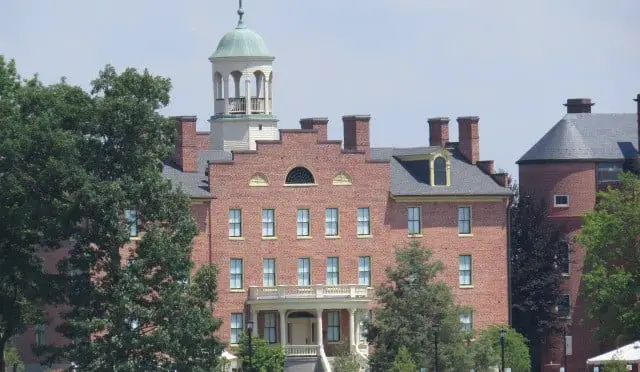
General John Buford observed the first Confederate troops from this cupola
Battle of Gettysburg – July 1st 1863
The next morning on July 1, 1863 Confederate General Heth ordered his infantry division to attack the Union cavalry that was defending the town. The Confederates advanced with two brigades led by James Archer and Joseph Davis (nephew of Jefferson Davis).
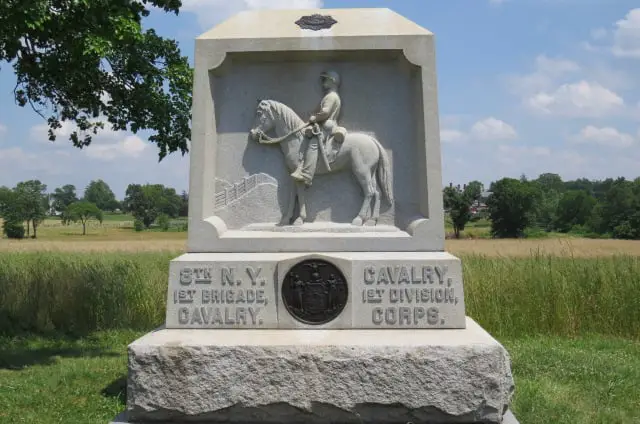
8th N.Y. 1st Brigade Cavalry Monument
The rebels thought the Union troops would be easily defeated but that was not the case, they fought very bravely and held the rebels off for two hours before Union General John Reynolds arrived with his veteran infantry corps.
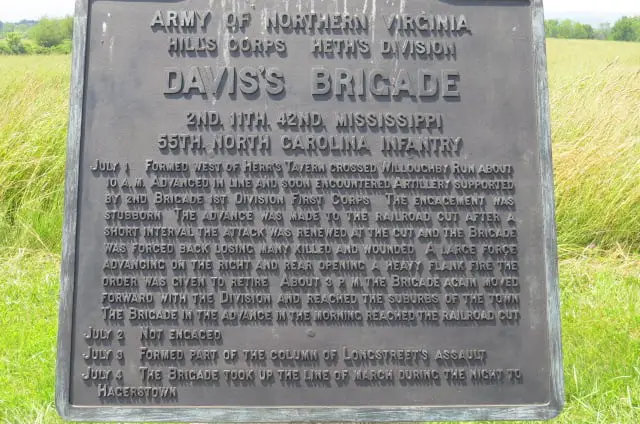
Davis’s Brigade
Shortly after Reynolds had arrived at the battle of Gettysburg he was shot in the back of the head and killed instantly. There is debate as to who actually killed Reynolds.
Was it a Confederate sharpshooter, regular infantry or even friendly fire? No one knows for sure, however the most widely accepted theory is a Confederate sharpshooter.
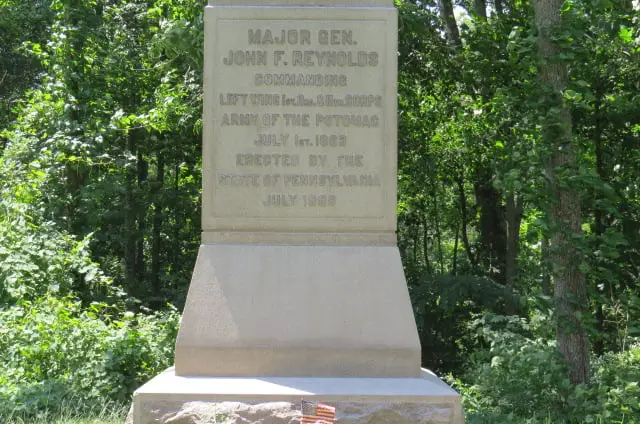
Monument marks the location where General John Reynolds was killed
Despite his death Reynolds’ men fought hard and eventually drove the rebels from McPherson’s ridge inflicting heavy casualties on the Confederates. Davis’s troops were trapped in an unfinished railway cut, which was not a good defensive position. They took many casualties before retreating.
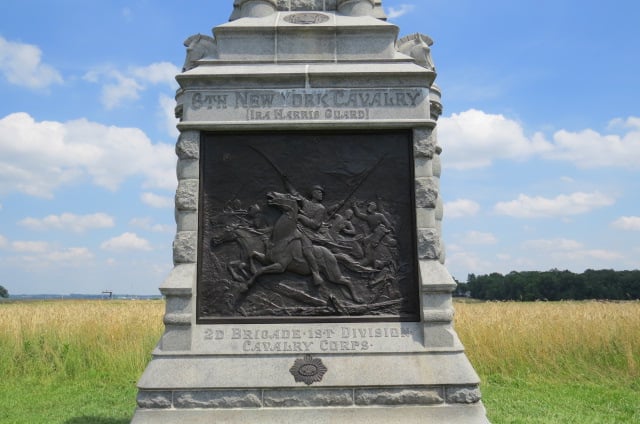
6th N.Y. Cavalry
As for Archer he led an attack against the famous Union Iron Brigade. His men suffered heavy casualties in this assault and many were taken prisoner including Archer himself who was found hiding in some bushes.
At around two o’clock in the afternoon Confederate General Richard Ewell’s corps suddenly and without orders attacked the Union line in their right flank. This proved to be a great opportunity for the Confederates and Lee immediately seized it and ordered a general attack all along the line.
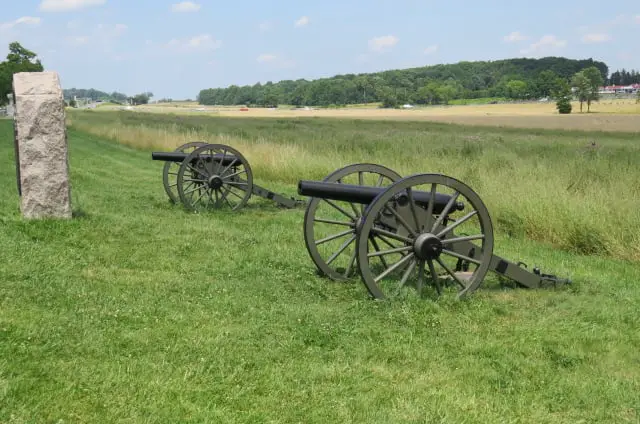
Gettysburg cannons in position on the first day of battle
The Union troops were outmatched. They broke from battle fleeing through the town of Gettysburg from the pursuing rebels. Union forces were being defeated all along their line prompting Union General Oliver Howard to order a general retreat to higher ground on Cemetery ridge. Lee realized very quickly that if the Union could establish itself on this ridge it would be in an excellent defensive position, which would be very difficult to dislodge.
Lee suggested to Ewell that Cemetery ridge be taken if it was “practicable” Ewell decided it was not and did not even attempt to take it. Despite the urging of his subordinates Ewell refused. Thus passed one of the greatest opportunities the Confederates had to decide the battle very early on.
Over on the Union side General Winfield Scott Hancock had arrived and taken command from General Howard. He was able to calm everybody down and it was he who determined that they were in an excellent defensive position. They would stay right where they were and fight this battle.
The first day of the Battle of Gettysburg ended with a decisive Confederate victory.
Battle of Gettysburg – July 2nd 1863
On the morning of July 2, 1863 the battle of Gettysburg entered its second day. Union and Confederate armies starred at each other across an open field. During the night both sides received more troops.
Union forces now numbered around 60,000 while the Confederates had about 50,000 troops on the Gettysburg battlefield.
At 11:00 am Lee made his move. He ordered General James Longstreet to attack south up the Emmitsburg road toward Little Round Top and Big Round Top which appeared to be empty of Union troops. An attack here would strike the Union in its left flank.
Since General Meade would be focused on the Confederates at Culp’s Hill which he could clearly see, this maneuver against his left flank would come as a bit of a surprise. This is what Lee had assumed would be the case.
The man in charge of leading the attack, General Longstreet was not at all convinced this was a good idea. He thought it would be better if he and his men snuck around the Union lines and came up behind them, thus forcing the Yankees to attack them.
If you would like to read more about the second day of the battle of Gettysburg check out #ad Gettysburg–The Second Day

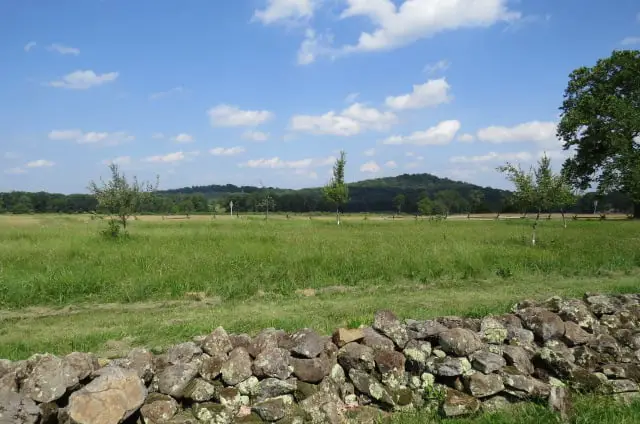
Off in the distance is Little Round Top and Big Round Top
Longstreet was hoping that Lee would change his mind about this attack and cancel it. He therefore took his time getting to the attack positions ordered by Lee. It took him and his troops several hours in fact to march south to where the attack would begin.
When the southern troops finally reached their attack position they quickly discovered that an entire Union corps was standing in their way. General Daniel Sickles led this corps. Sickles had on his own without orders moved his men well ahead of the rest of the Union line setting up along the Emmitsburg road which offered slightly higher elevation.
By doing this he had separated himself from the rest of the Union army and was in a very exposed position that could easily be attacked and outflanked. Seeing this the Confederates had no choice but to attack this bulge in the Union line.
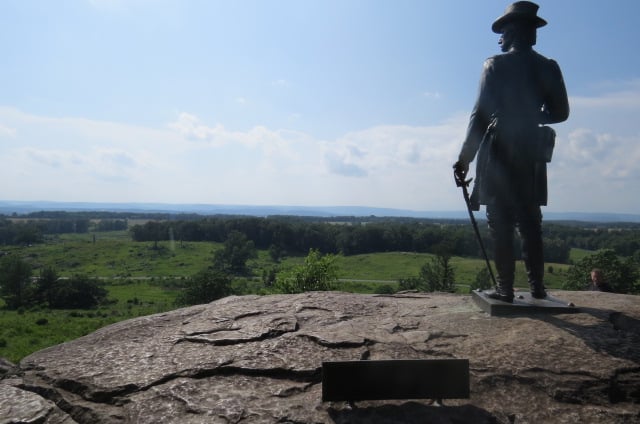
Union General Warren on Little Round Top
It wasn’t until around 4:00 in the afternoon that the Confederates finally launched their attack. General John Bell Hood and Lafayette Mclaws led the two Confederate divisions leading this attack. The Confederate attack would be en echelon, which would start on their right flank and swing left to hopefully outflank and roll up the Federal lines.
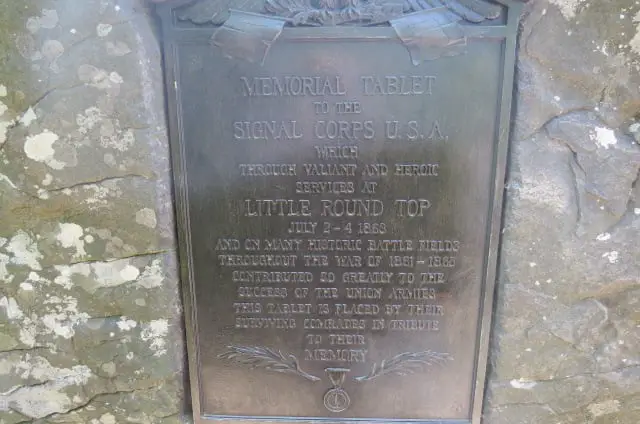
Memorial Tablet for the Signal Corps on Little Round Top
At this same time Lee ordered General Ewell to make a “demonstration” against Culp’s Hill to tie up as many Union troops as possible and even make a full fledged attack toward Culp’s Hill if the opportunity presented itself. This “demonstration” would prevent the Union from shifting troops to the south to reinforce their lines.
Meanwhile the main attack in the south began starting with an artillery bombardment of the Union lines. General Hood and his men began the attack. The Confederates entered Devil’s Den, which saw very bloody fighting often hand to hand.
The Confederates fought their way through Devil’s Den and on to Little Round Top. It was here that they met the men of the 20th Maine under the command of Joshua Chamberlain.
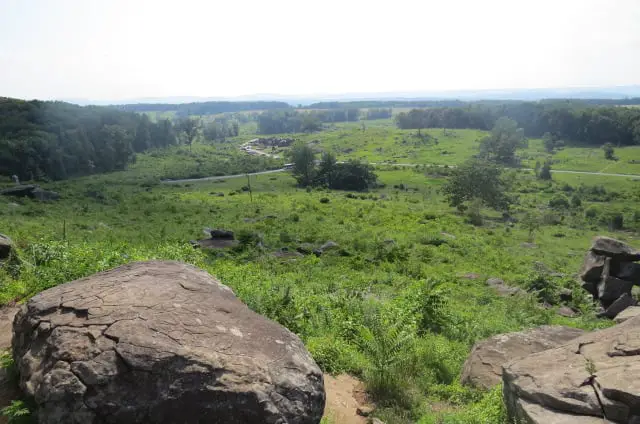
Devil’s Den as seen from Little Round Top
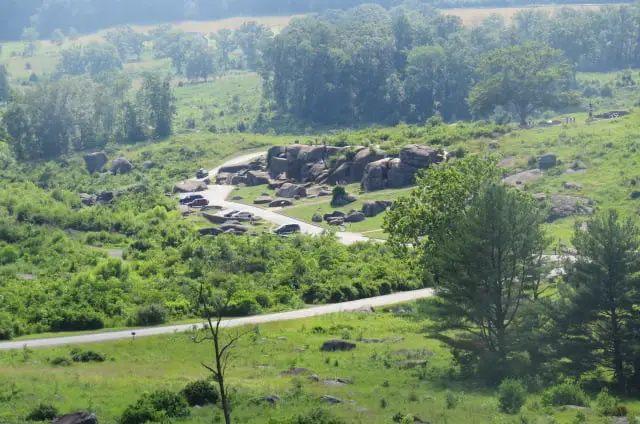
Closer look at Devil’s Den from Little Round Top
The Confederates charged the 20th Maine three times but were beaten back each time. After the third attempt they had enough and began moving off of Little Round Top.
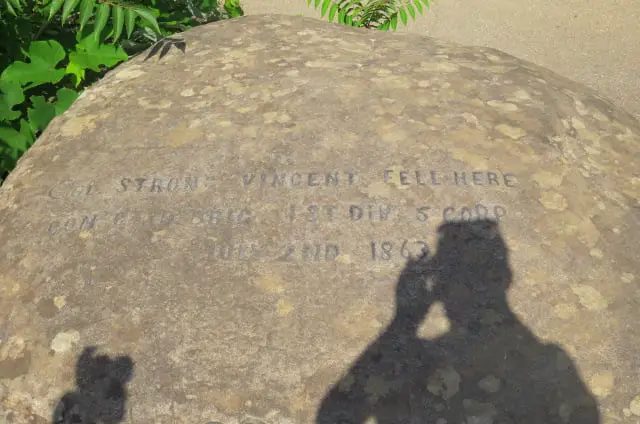
General Strong Vincent was mortally wounded on this spot on Little Round Top
Seeing the rebels withdraw Chamberlain ordered his men to fix bayonets and swept the rebels from the hill.
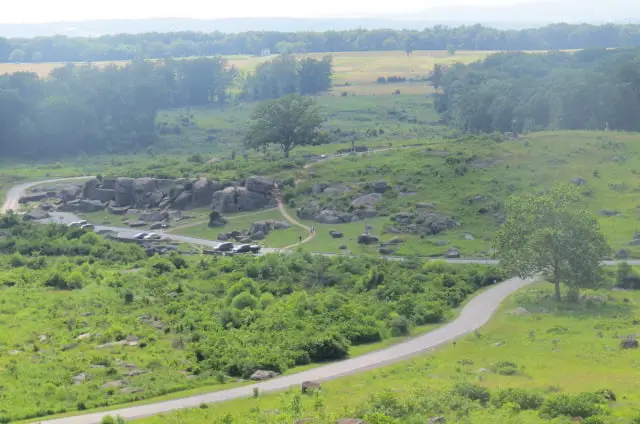
Another view of Devil’s Den from Little Round Top
Chamberlain would go on to great fame for his actions during the battle of Gettysburg. Retreating back to Devil’s Den the Confederates continued to return fire with the 20th Maine though now they were simply trying to hold their ground.

Union defenses on Culp’s Hill at Gettysburg
Meanwhile at around 5:00 pm Mclaws began his attack into the peach orchard easily overwhelming the Union troops defending the area. The rebels pushed the Union troops into a wheat field where the fighting turned into a hand-to-hand melee which was extremely bloody on both sides.
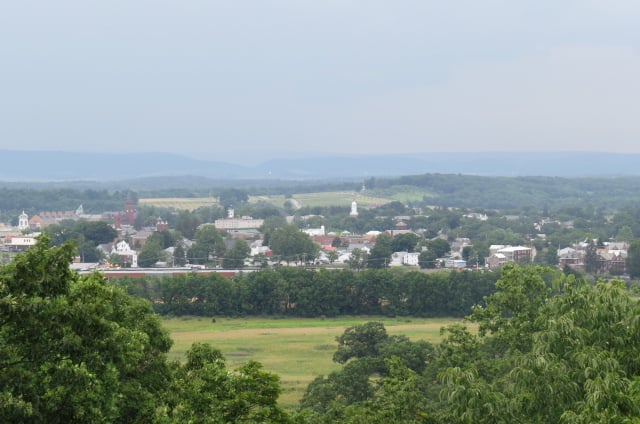
View of Gettysburg from Observation Post on top of Culp’s Hill
The rebels sustained many casualties in the fighting coupled with more Federal troops being rushed to the area. The attack failed and the rebels were forced to withdraw.
At around 6:00pm Anderson began his attack toward the Union lines. General Hancock was the commander of the Union center at Gettysburg. He had weakened his own lines in order to support General Sickles who was receiving the full force of the Confederate attacks.
Weakening his lines General Hancock took a big risk because it was at this weakened spot that Anderson attacked. The rebels had initial success even reaching the top of Cemetery Ridge, if only briefly staying there. Hancock out of sheer desperation after seeing this ordered the 1st Minnesota regiment who had just arrived in the area to attack the rebels.
They of course did what they were ordered to do and in doing so suffered over 80% casualties. Their bravery was not in vain however because it bought Hancock enough time to reform his defensive position and drive the Confederates back to where they came from.
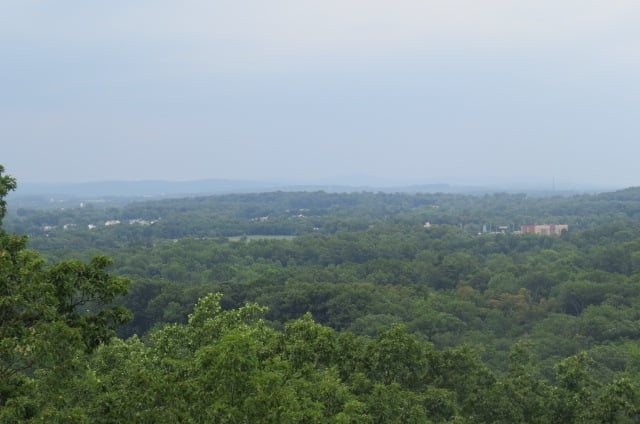
View from Observation Post on top of Culp’s Hill
Gettysburg day two was not over yet. At around 7:00pm Confederate forces began their attack against the Union right flank. This was the “demonstration” the Lee had ordered Ewell to make.
The attack began with some success. The Confederates took some ground and inflicted many casualties on the Federal troops however the Union was able to reinforce their lines and the rebel attackers received no additional support so their attacks eventually petered out and failed.
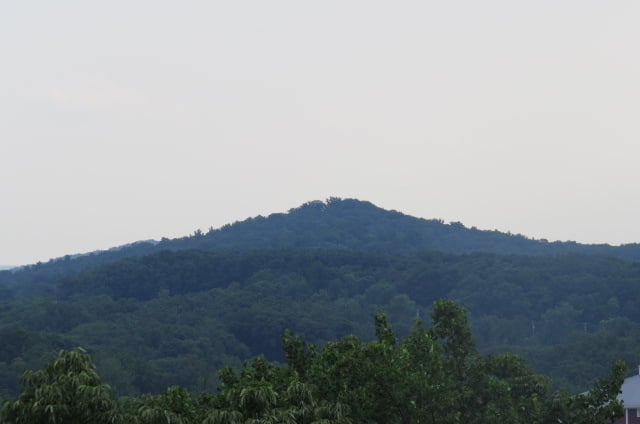
Big Round Top as seen from Culp’s Hill
This last attacked ended the brutal second day of fighting at Gettysburg. Lee came very close to breaking the Union lines.
Fortunately for the Union he failed. Casualties were very high on both sides, each losing roughly 10,000 men each. A bit shaken up by this Meade called a meeting that night to take a vote with his corps commanders as to whether they should remain at Gettysburg and fight, or if they should withdraw.
It was a unanimous decision. They would stay and fight.
Battle of Gettysburg – July 3rd 1863
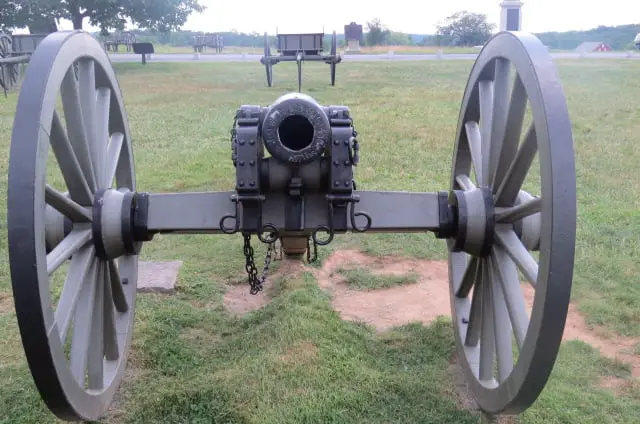
Gettysburg Artillery
July 3, 1863 was the third and final day of the Battle of Gettysburg. It was Lee’s last chance to break the Union lines. His plan was to charge right through the center of the Union line and split them in two.
During the night both sides were continually reinforced bringing both of their troop strengths back up to where they had been at the beginning of the Battle of Gettysburg.
Gettysburg Day Three – Pickett’s Charge
Early in the morning the Union struck first. General Slocum attacked Confederate troops at Culp’s Hill to regain territory lost the previous day. This fight lasted for a good 8 hours finally forcing the Confederates to retreat off of Culp’s Hill.

General George Pickett during the Civil War
While this was taking place Lee was planning the main attack at Gettysburg. This was of course the famous Pickett’s Charge.
General George Pickett and his division had just arrived on the night of July 2nd. Followed by the arrival of Jeb Stuart and his cavalry.
Lee was not happy with Jeb Stuart because of his long absence from the battle of Gettysburg, but quickly overcame his anger and set out the plan for the day’s attack.
General James Longstreet would command Pickett’s division. Pickett would command his three brigades and would also be in command of two brigades from Anderson’s division.
On the left would be four brigades under the command of Pettigrew, followed up by Pender’s brigades under the command of Trimble.
This was a combined force of 12,500 men that stretched for about one mile.
Longstreet and Pickett’s Charge
General Longstreet was very distressed with this attack at Gettysburg. He did not think it would be successful. he even tried to convince Lee to call off the attack.
Longstreet argued that it would require double the amount of men and even then it was questionable whether it would succeed. His effort fell on deaf ears. Lee was determined to make the attack; he believed it had a good chance of success.
To learn more about the third day of the battle of Gettysburg read #ad Amongst Immortals Raging, Gettysburg’s Third Day Begins

Why Did Robert E. Lee Want to Attack
Despite the fact that the attacks of the previous day had all failed and many more troops were used in those attacks. Lee reasoned that those attacks were at different points on the battlefield and were not done at the same time therefore they failed.

Confederate cavalry leader Jeb Stuart
Essentially the attacks of July 2nd were many small attacks where Pickett’s Charge would be one massive attack aimed at one point in the Union line preceded with a massive artillery bombardment.
Jeb Stuart and his cavalry would also play a critical role in the attack. Stuart was to circle around the Union lines at Gettysburg and while the infantry was attacking the center of the Union forces Stuart and his cavalry would attack the Union center from the rear thus joining with their comrades and splitting the Federal forces in two.
If this attack were to succeed the Confederates would undoubtedly win the battle of Gettysburg. General Lee felt confident it would be successful.
Confederate Artillery Bombardment at Gettysburg
It was 1:00pm when the Confederate artillery began the first phase of the battle plan. Over 150 guns opened fire on the Union center.
The Federals returned fire and the most massive artillery bombardment during the Civil War had begun. The sound was so loud the gunners ears bled. The barrage was so loud it could be heard as far away as Philadelphia and Baltimore.
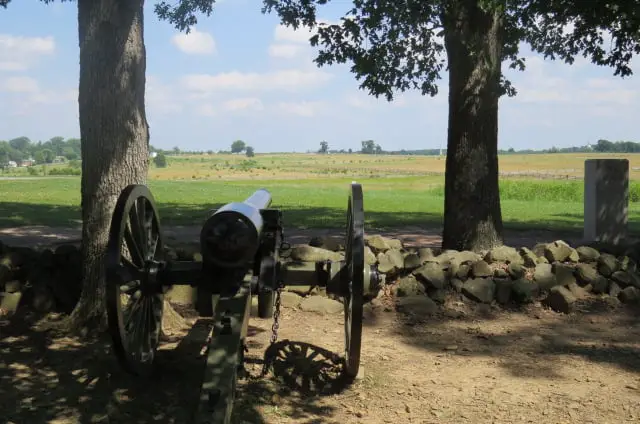
Confederate Artillery at Gettysburg looking over the field of Pickett’s Charge
For over an hour the artillery duel continued. At a little past 2:00pm the Union began to slowly stop firing. This was a trick to deceive the Confederates into believing they had knocked out all the Union guns.
The trick worked and at 3:00pm the Rebels stopped firing. They were also dangerously low on ammunition and needed to conserve it as much as possible.
It was at this time the commander of the Confederate artillery Porter Alexander pleaded with Pickett to attack now otherwise we will not be able to support you.
Pickett rushed to Longstreet asking for permission to begin the attack. So despondent over the attack, which he knew would fail, Longstreet could do nothing more than simply nod his head and wave his hand to give the order to Pickett.
Pickett’s Charge Begins
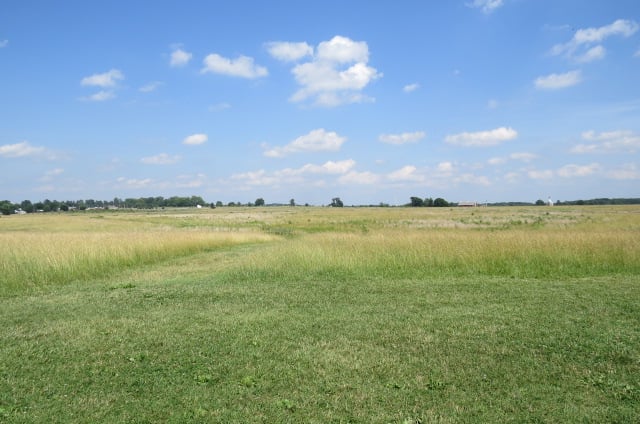
Pickett’s Charge – View from the Confederate Starting Position
Now was the moment that over 12,000 rebel troops emerged from the tree line and lined up in formation for the fateful march. Their main focus was a little copse of trees behind the Federal lines, which you can still see today.
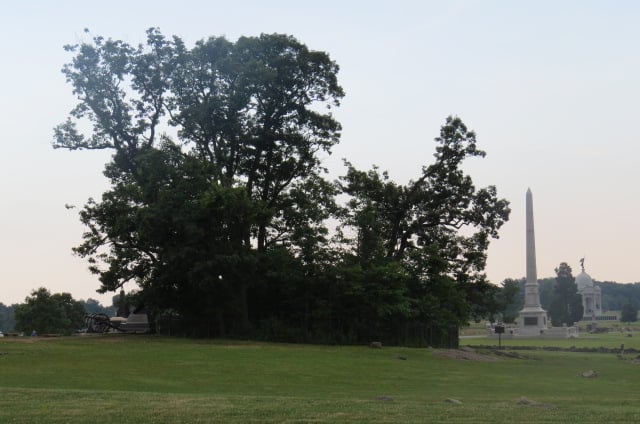
Copse of Trees at Gettysburg
General Pickett was in very high spirits and truly believed his men would be able to break the Union lines. The moral of his men was also high because they also believed the Federals would break.
Pickett shouted to his men that they were all Virginians and to remember what they were fighting for. With this the Confederates started forward.
The long gray line advanced toward those copse of trees at a steady pace. At first all guns were silent including the Federals. The Union troops were in awe seeing this vast force of humanity slowly but steadily approaching them.
Halfway across the field Pickett’s division (which was not personally led by Pickett because he had stayed behind and was watching the battle with the rest of the commanders) performed a left oblique to close the gap between them and the rest of the units.
Pickett’s Charge Comes Under Attack
This was when the Union opened up with their artillery on the advancing rebels. They fired from both Cemetery Hill and Little Round Top, slamming into both flanks.
The Confederates finally reached the Emmitsburg road only to be confronted with a simple fence. This simple fence however turned out to be a very difficult obstacle.
The Confederates were now in rifle range. They had to jump this fence and in doing so made easy targets for Union troops, the fence also broke up the formations and slowed the advance significantly.
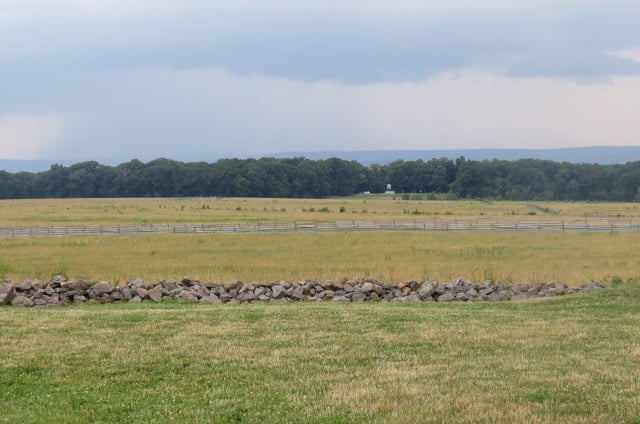
Picketts Charge – This is what a Union soldier saw. In the center is the fence that runs along the Emittsburg Road.
Many of the Confederates never advanced beyond the Emmitsburg road, pinned down by heavy Union rifle fire. Several hundred of them did keep advancing and bravely pushed forward toward a low stonewall which was just in front of the little copse of trees, the goal of the southern attack. They had finally reached the Union line. This was the moment where the battle would either be won or lost.
Gettysburg Day Three – The Bloody Angle
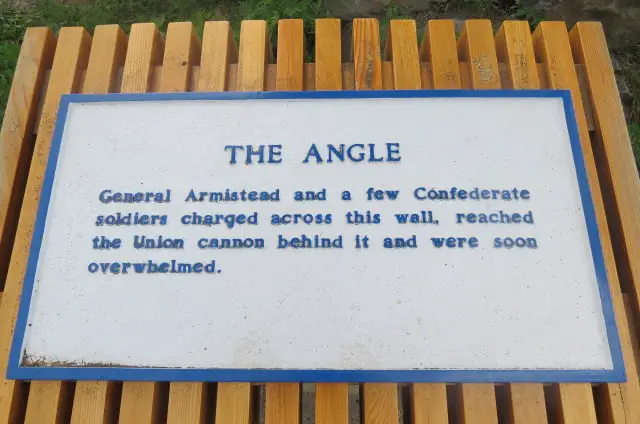
Bloody Angle Plaque – High Water Mark of the Confederacy
The rebels rushed the stonewall and brutal hand-to-hand combat quickly ensued at an angle at the wall. It was now that Confederate General Lewis Armistead famously put his hat on the tip of his sword and urged his men forward. Pushing the Union defenders back the rebels went forward over the stonewall.
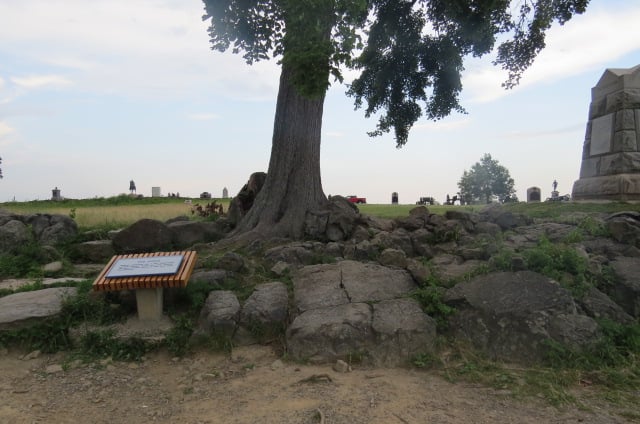
The Confederate View of the Angle as they approached
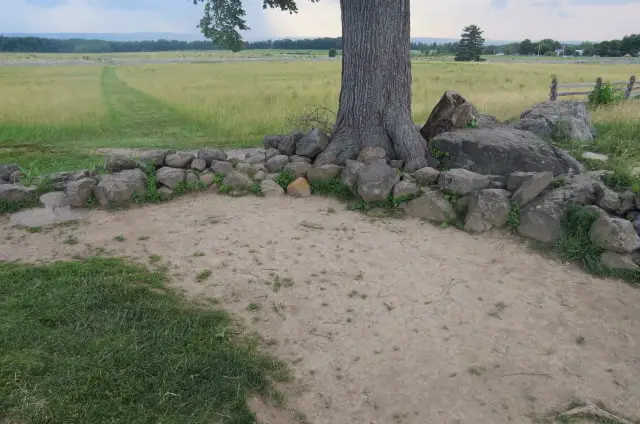
Bloody Angle – Union Side of Wall
Armistead only had about 300 men following him at this point but still they pushed on. Here was an artillery battery commanded by Colonel Alonzo Cushing and while his men were falling back Cushing ran up to one of his guns to “give them one more shot” which turned out to be his last words. He was immediately shot in the chin and killed instantly falling over his gun.
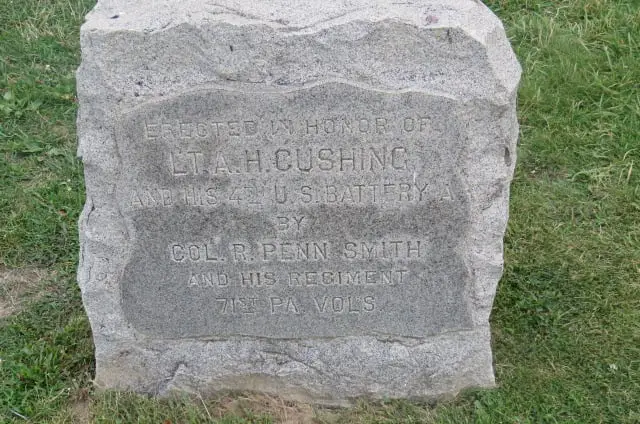
This is the spot where Cushing was killed
High Water Mark of the Confederacy
At this very moment was the “high water mark of the Confederacy” at the “ bloody angle”. This was the closet point the South ever came to winning the Civil War.
The rebels reached Cushing’s guns and Armistead now with his hat falling to the hilt of his sword urged his men to turn the guns on the Yankees.
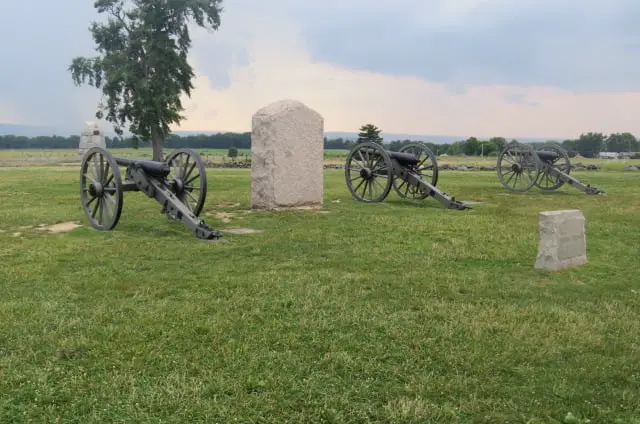
Cushing’s Guns at Gettysburg – The Rebels desperately tried to capture these
Before achieving this however Armistead was shot three times and fell to the ground. His wounds were not believed to be fatal, he was captured and taken to a Union field hospital for treatment. He died on July 5th. The cause of death is not officially known.
Union Army Counterattacks
The Union quickly poured in fresh troops to fix their broken line and counterattacked.
Jeb Stuart and his cavalry attempted to meet the infantry attacking the Federals in the rear of their line. Stuart never showed up. He and his men ran into Federal cavalry commanded by George Armstrong Custer and were defeated forcing them to withdraw.
The remaining men of Pickett’s Charge were overwhelmed by Union troops and forced to retreat. The rebels fled back to their original lines. It was all over. Pickett’s charge had failed.
Why Did Pickett’s Charge Fail
The attack was a disaster, over half of the 12,500 troops that started the attack were gone. They were dead, wounded, or missing. Pickett’s division only had 800 men left out of 5,000.

Gettysburg Union and Confederate dead
Lee took full blame for this failure and greeted the troops as they returned back to the Confederate lines. He tried to encourage them to pick up rifles and prepare for a Federal counterattack, which he believed, would be forthcoming.
Pickett’s Charge failed for several reasons
- The preceding artillery bombardment did not inflict many casualties on Union troops and it also did not destroy the Union artillery. This failure led to the Union artillery wrecking havoc on the advancing Confederates.
- The Confederates did not have enough men for the attack, as General Longstreet warned.
- The Union army was in a very strong defensive position, and was able to easily send reinforcements to the area.
Conclusion
The next day July 4th the two armies glared at each other across the open field. Lee still thinking General Meade would attack prepared a defensive line and hoped for an attack to come so he could do to the Union what the Union did to his men.
Meade however had other ideas and decided that his troops had done more than enough at Gettysburg and did not launch an attack. With that the battle of Gettysburg ended. Four months after the battle Abraham Lincoln gave one of his most famous speeches, the Gettysburg Address.
On the night of July 4th General Robert E. Lee and his Army of Northern Virginia left the Gettysburg battlefield forever. Against President Lincoln’s wishes General Meade did not attack the defeated Confederates and finish the job at Gettysburg.
He essentially let the Confederates retreat, which ultimately led to his replacement as commander of the Army of the Potomac. The Union suffered 23,000 casualties and the Confederates suffered 28,000 casualties.