July 10th 1863 – September 7th 1863
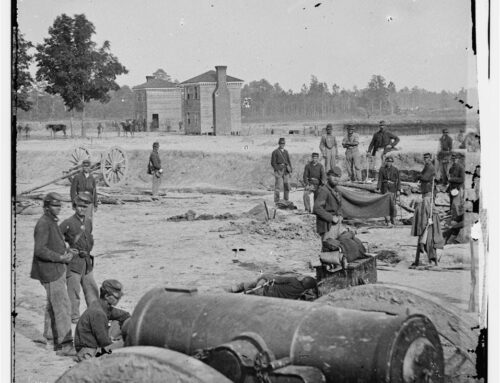
Fort Wagner was a Confederate fort located on Morris Island, South Carolina. Fort Gregg was another fortification located near Fort Wagner also on Morris Island.
Fort Sumter is located on it’s own island approximately 1.75 miles to the north of Fort Wagner and Fort Gregg. These forts were able to give supporting fire to each other if any of them were attacked.
Fort Sumter protected Charleston harbor from attack. The Union’s main objective was to destroy and silence Fort Sumter. In order to do this they needed to control Morris Island. This meant they had to attack Fort Wagner. Once Morris Island was under Union control the plan was to set up artillery batteries and fire directly at Fort Sumter reducing it to a point where it could no longer threaten Union naval forces.
The Union navy would then clear the channel of the obstructions the Confederates placed and seize Charleston harbor and be able to attack the city of Charleston directly.
After the initial failed assault on Fort Wagner the remaining Union soldiers fell back to defensive position. The brutality of the first attack left the Union commanders puzzled as how the Confederates were able to defeat them so easily.
The Rebels were dug in very well at the fort and it would take much more than a few hundred Yankees charging up a knoll to dislodge the defending Rebels.
From Morris Island, the neighboring beachhead to the north of Ft. Wagner, the Union force enrolled the new brilliant yet untested 54th Massachusetts regiment. The black regiment was the talk of the Civil War and on July 18th, 1863, the men of the 54th would demonstrate what they had learned. Fighting. Their leader was the courageous and Caucasian, Colonel Robert Gould Shaw.
The second assault was met with the same fine defensive stance as the first and once again the Yankees even with the brave and capable 54th, were sent retreating back to Morris Island. One man did not make it back.

The 54th Massachusetts attack on Fort Wagner
Colonel Robert Shaw lay dead on the bloody ground, killed fighting right along side the troops he so loved and honored. The bravery and devotion shown by the black troops in the siege although resulting in failure, was to be their hallmark as the news spread commenting on their valor. The losses they took were substantial and coupled with the loss of their fine leader, made the 54th a wounded but still tough fighting force.
The Union army decided to keep at the fort and after three weeks of intermittent fighting, Ft. Wagner fell to the Federals. A hollow victory at best since the Confederates almost walked away from the fort once the shelling entered its third month. The leader of the Union command was General Quincy Gilmore, an often-maligned leader who could never really dominate any battle in the Civil War. The general would leave the Ft. Wagner recalling in his memories the gallant display he witnessed by the 54th regiment.
This was in stark contrast to what the Confederate leader, General Beauregard, had to say about the 54th’s men. The words not fit to print here. Suffice to say they were not well-received words. The doubt of the valor and fighting capabilities of the black soldiers was now a thing of the past. the men of the 54th showed to the world that black men could and would play an integral part in the victory by the Union forces in the Civil War.