February 6th 1862
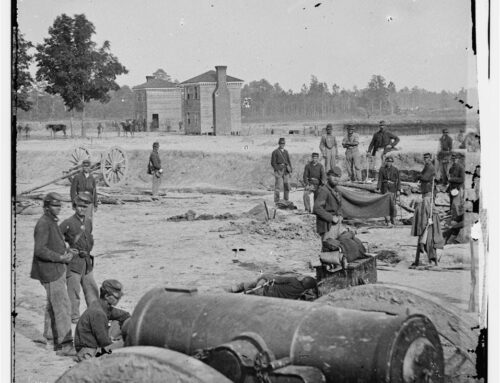
The waters of The Tennessee River were lapping at the sides of the earthen-fort, Fort Henry, in the winter of 1862. The Confederate stronghold had seen nothing that could compare with the duality of both Mother Earth and the Union army as both came clashing down on the base.
The venerable General Grant had already landed not one but two divisions on the banks of The Tennessee and was waiting to capture the Confederate soldiers. He was backed up with an impressive array of military hardware that included seven ships under the direction and leadership of Flag-Officer Andrew Foote. Things did not look well at all for the Confederates and the fort would soon be in the Federals hands.
The commander of the garrison at Ft. Henry was Brig. General Lloyd Tilghman, a superb commander with action in two major battles previously, both resounding wins. His appointment at the fort was seen more as a gesture of gratitude for his earlier performances on the field of battle.
General Tilghman was a smart man. He fully understood his predicament and made some tactical moves that showed his devotion to his men first, the Confederacy second. He lead his garrison of men out of the soon to be taken fort and sent them to a nearby fort, Ft. Donelson. The sister fort was only 10 short miles away so demographically this pseudo abandonment of his fort possibly saved the lives on his men there.
With the bulk of his men out of harms way, the General returned to his fort to direct the surrendering procedures. The surrender went well and within two hours after returning to the base, Fort Henry was in the hands of General Ulysses S. Grant. This was a definite Union victory with ample spoils of war. The spoils turned out to be the geographic importance of the fort’s capture to the cause of the Union army.
The surrender now meant that the Union could sail up and down the fabled Tennessee River as far south as Mussel Shoals, Alabama. This was bad for the South as it meant that the Union had found not one but two different paths in which to ferry men and supplies in and out of the battle action.
The route to the west was now open and usable but only for the Union war machine. The end was not near, not by a long shot as there were plenty more important battles and skirmishes that had to be fought and won for the Union to secure a victory and end this dark period in the time of the American people.
Two natural barriers walled the Confederate western theater, the Appalachian Mountains and The Mighty Mississippi. Now they were in the control of President Lincoln and General Grant. Dark days were ahead for the Confederate army and its war- time cause. The fate of surrendered General Tilghman was that he would be relieved of duty and transferred to more hospitable confines as the commander of a secluded fort in the west.