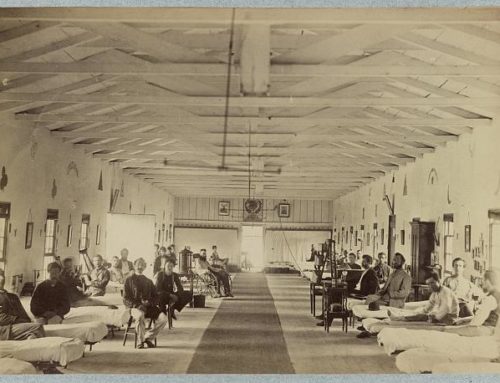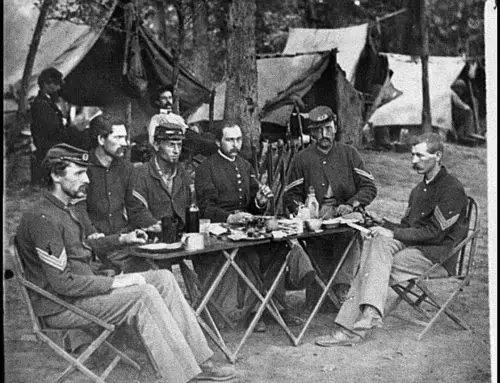
The Trent Affair was a diplomatic incident that occurred on November 8th 1861 between the United States and England during the Civil War. A United States ship the San Jacinto operating in the Caribbean stopped the British mail ship the Trent and arrested four of its passengers.
In October 1861 the USS San Jacinto commanded by Captain Charles Wilkes was returning from a voyage off the west coast of Africa.
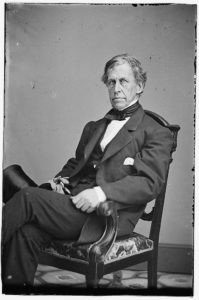
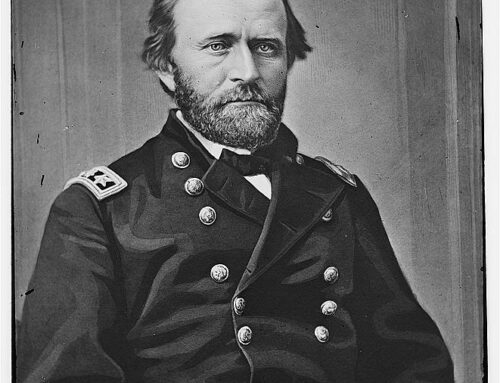
Charles Wilkes Captain of the San Jacinto during the Trent Affair
The San Jacinto stopped at St. Thomas in the Caribbean to take on coal. While there, they learned that a Confederate Navy cruiser the Sumter commanded by Captain Raphael Semmes had recently been in the area.
Eager to capture this Confederate ship Captain Wilkes immediately set sail in an attempt to find it.
Trent Affairs begins with Two Confederate Commissioners
Reaching port on the south coast of Cuba Captain Wilkes learned that two Confederate commissioners to Europe, James M. Mason the Confederate commissioner to Great Britain and John Slidell the Confederate commissioner to France along with their two secretaries and families had left Charleston, South Carolina and arrived at Havana Cuba on October 17th.
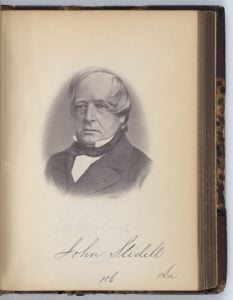
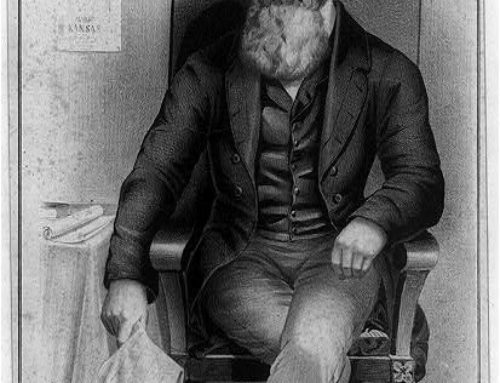
John Slidell Commissioner to France involved in the Trent Affair
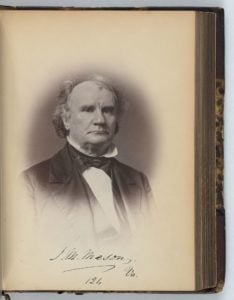
James M. Mason Commissioner to Great Britain involved in the Trent Affair
They were set to depart for London on November 7th on the English steamer Trent. The Trent was a mail ship that also carried passengers; it was not a warship that could defend itself.
On October 26th Captain Wilkes set sail to intercept the Trent and capture the enemy agents.
Europe Sympathized with the Confederacy
Early in the Civil War England and France and most of Europe were very sympathetic to the Confederate cause. This was evident to the crew of the San Jacinto when they stopped to purchase supplies in the British possessions throughout the Caribbean. In St. Thomas, the Caymans and Cuba they were received with indifference from the locals. Prior to the Civil War these places were happy to sell provisions to United States ships but now they were much less interested in helping.
The Confederate cruiser Sumter, which the San Jacinto was still searching for, had stopped in the Caymans only days ahead of the San Jacinto. The locals praised the Sumter and talked highly of their crew while being less than eager to help Union ships.
Intercepting the British Mail Ship Trent
Leaving the Cayman islands Captain Wilkes correctly calculated the probable route the Trent would take and on November 8th the San Jacinto was lying in wait for the Trent in a narrow part of the Bahama channel about 240 miles from Havana when the Trent appeared.
As the Trent approached the San Jacinto Captain Wilkes fired a warning shot in an attempt to force it to stop. Not responding to this shot the Trent continued toward the San Jacinto. Captain Wilkes fired another shot directly in front of the Trent’s bow. This shot brought the Trent to a halt.
Captain Wilkes ordered his executive officer Donald McNeil Fairfax to take three small cutter boats, with an armed crew, board the Trent, demand the passenger list, arrest the two commissioners and their two secretaries and take the Trent as a prize.
Eager to avoid having the Trent Affair start an international incident which might cause England and France to declare war on the United States, Fairfax decided to do everything he could to disobey the order to capture the Trent.
Launching three small boats from the San Jacinto Fairfax along with a boarding party arrived at the Trent. He quickly explained to Captain Moir of the Trent the purpose of boarding his ship was to arrest the two commissioners and their two secretaries. He made no mention of capturing the Trent.
After hearing the reason for boarding the ship the passengers on the Trent, which numbered around 100 people, started screaming and becoming disorderly, threating to throw the men from the San Jacinto overboard. The executive officer demanded that Captain Moir restore order and threatened that every move being made on the Trent was being carefully watched by the San Jacinto and all guns were trained on the ship ready to fire.
Fairfax was afraid if things became too out of control the Captain of the Trent would simply give up his ship and force the United States to take it as a prize. While this is what Captain Wilkes intended to do from the beginning, it was exactly what Fairfax did not want to happen.
With Fairfax’s threat of opening fire on the Trent and Captain Moir’s ability to calm the passengers things began to calm down and order was restored. The two commissioners and their two secretaries were taken off the Trent and loaded with their luggage onto the San Jacinto.
On returning to the San Jacinto Fairfax explained to Captain Wilkes his reasons for not capturing the Trent. He gave two reasons; the first was that the San Jacinto would have to put a large prize crew aboard the Trent. This would weaken the ability of the remaining crew on the San Jacinto if they were to get into a battle. Second, since there were so many women, children and mail parcels on the Trent all destined for different ports, it would severely inconvenience everyone on board, so it would be better to release the Trent and let it continue on its voyage.
These reasons satisfied Captain Wilkes and the Trent was allowed to go free. The four prisoners were sent to Fort Warren in Boston, MA. England and France both protested these arrests and demanded the release of the men. On January 1st 1862 the four prisoners were put aboard the English steamer Renaldo which was sent to Massachusetts to receive them. They sailed for England, arriving there on January 29th 1862.
The reason Fairfax disobeyed orders during the Trent Affair
Several weeks after the Trent Affair, Fairfax gave his real reason for not capturing the British ship. Secretary of the Treasury Salmon P. Chase questioned Fairfax as to why he deliberately disobeyed Captain Wilkes order to capture the Trent.
The executive officer gave his real reason for disobeying the order. He reasoned that if the United States were to capture the British ship, which belonged to a neutral country it would have dire consequences which could have led to war between the United States and England. Fairfax’s decision not to capture the British ship during the Trent Affair potentially avoided a much larger incident.