Civil War Flags
Civil War
Custom Search


Richard Ewell

General Ewell

(1817-1872)


As Stonewall Jackson's successor, the courageous Richard Ewell was no replacement for the superior Stonewall. Ewell lost his leg in battle and was considered to be a mild disappointment throughout his military career. To say that his best moment of the Civil war was in a losing cause would be correct.

The Battle of Gettysburg proved to be the example of what went wrong in General Ewell’s career, missed opportunity. His leadership was full of those but the Gettysburg drama would showcase this blaring defect. Lee would later release him from duty and General Ewell would fade off into history as the one that let the one get away.

Richard Ewell
Richard Ewell
Graduating from West Point in 1840, Richard Ewell saw his first major action of the Civil War at The Battle of The 1st Bull Run. He commanded a division under Jackson in the Shenandoah Valley Campaign but was accused of complaining by Jackson over being left in the dark over battle plans. Jackson was not the type of leader who felt it necessary to indulge his men what his plans were only to effectively carry them out.

After Bull Run Ewell commanded a division at both the Seven Days Battle and Cedar Mountain before losing the previously mentioned leg at Bull Run. After a brutal and long recovery, Ewell was sent by Jackson to assist in the command of Jackson's old corps, it was a decision that would haunt Stonewall for quite some time. It seems that Ewell was great at leading a smaller more compact unit but when he was given the opportunity to lead an entire army he showed his weakness.

At Gettysburg, he would show that maybe the critics were a little early on stating that he was an ineffective leader of a large unit. General Ewell commanded a division that did well at Gettysburg on an early action assignment, but that winning was soon lost to "Old Baldy's" normal pattern, disappointment. By not having the mental capacity to take orders then follow through with them exactly or at least close to the mark, General Ewell failed at Gettysburg. He had ample chances at driving a division of Unions soldiers to the end o of the line, but failed again. His critics would fall back on the actions that Ewell displayed at Gettysburg and cement this into his career.

The remainder of General Ewell’s career did not involve anything spectacular or mind-blowing. At The Battle of the Wilderness Ewell once again proved feeble in his tactical order -taking and the beat went on. One more chance, one more near massacre. The debacle at Spotsylvania proved too much for the embattled General Ewell and he received his walking orders later in 1865.

Ewell recycled back to civilian life after his release from Fort Warren and spent he rest of his days "messing up" the orders from his wife. It must have been hard for "Old Baldy" to sit on the porch in Spring Hill, Tennessee recalling the days that he could not fully and competently lead an organization of soldiers in battle. General Ewell passed in 1872, after a long-bout with an illness.
Return From Richard Ewell to Civil War Generals


Feb 19, 2010, Advertising Disclosure

Advertising Disclosure. This site is my personal site. It accepts advertising and other forms of compensation.

Permalink -- click for full blog post "Advertising Disclosure"


Dec 5, 2009, Civil War, American Civil War, Reconstruction

The Civil War was a horrific four years for the nation. When it was over, more than 620,000 Americans had died from battle and war-related causes. American had fought against American and in some cases, brother had literally fought against brother.

Permalink -- click for full blog post "Civil War, American Civil War, Reconstruction"


Nov 9, 2009, Brass Band, Civil War Music, Civil War Bands

The brass band of the Civil War played a very important role for both armies. They played at recruitment rallies and their music often helped to encourage young men to enlist.

Permalink -- click for full blog post "Brass Band, Civil War Music, Civil War Bands"


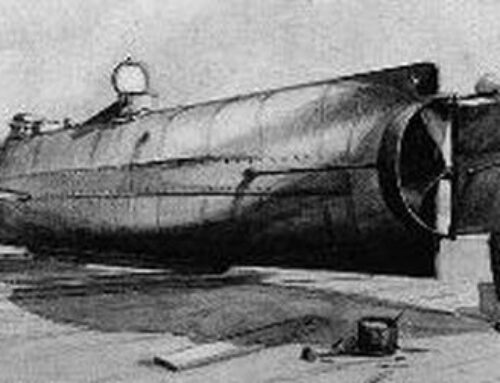
Nov 9, 2009, Civil War Ships, Civil War Marines, Hunley, Civil War Ironclad ships, USS Monitor

Civil War ships played an important role during the war, more important than most people think

Permalink -- click for full blog post "Civil War Ships, Civil War Marines, Hunley, Civil War Ironclad ships, USS Monitor"


Nov 9, 2009, Blockade Runner, Civil War Blockade, Civil War Ships

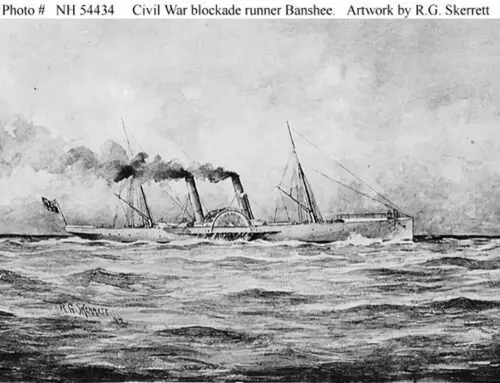
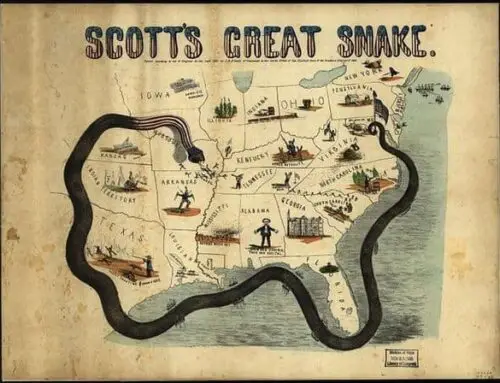
A Blockade runner was a ship that attempted to get through the Union blockade of Southern waters during the Civil War. One of the main goals of the North against the South was to starve them and cut off supplies and transports to and from the South.

Permalink -- click for full blog post "Blockade Runner, Civil War Blockade, Civil War Ships"


Nov 9, 2009, Belle Isle Prison, Civil War Prison Camps, Civil War Prisoners

Belle Isle Prison is located west of Richmond Virginia. It is a small island located in the James River that was used as a Civil War Prison for captured Union soldiers.

Permalink -- click for full blog post "Belle Isle Prison, Civil War Prison Camps, Civil War Prisoners"


Nov 5, 2009, Sherman's March, March to the Sea

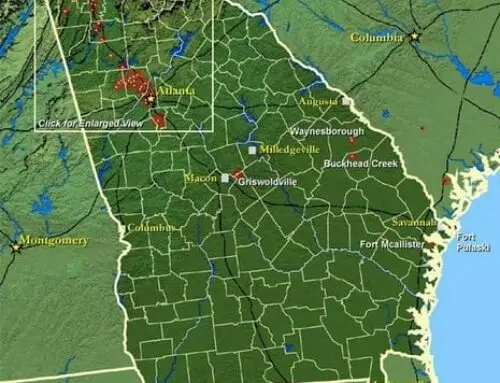
Sherman's March to the Sea would set the south ablaze. The sea was the goal, the end result, for the Union leader. General Sherman was a rogue if only for a few months, the general of the Union army stationed in the heart of the Confederacy was on a rampage.

Permalink -- click for full blog post "Sherman's March, March to the Sea"

ADD TO YOUR SOCIAL BOOKMARKS: add to BlinkBlink add to Del.icio.usDel.icio.us add to DiggDigg
add to FurlFurl add to GoogleGoogle add to SimpySimpy add to SpurlSpurl Bookmark at TechnoratiTechnorati add to YahooY! MyWeb