(1817-1863)
A shy man, Lewis Armistead lived a life fit for a novel. His friends playfully called him “Lo” short for Lothario. Although in no way was he like his nickname since he was a widower and career soldier.
Armistead had his greatest moment in the Civil War when he led a brigade with Pickett at Gettysburg that reached “The High Water Mark.”
This is the location recalled by the Confederates as well as Union soldiers that recalls the deepest penetration by the Confederacy at Gettysburg.
Although Armistead’s men were immediately pushed back and he was mortally wounded, he gained praise for his heroism and is remembered as a hero at Gettysburg. As a general in the Confederate army, Armistead was seen as a good leader with little flair for the surprise element.
He fought with General Lee at The Seven Days Battle and was chosen to lead the bloody senseless assault on Malvern Hill. But it was at Gettysburg that Armistead sealed his legacy.

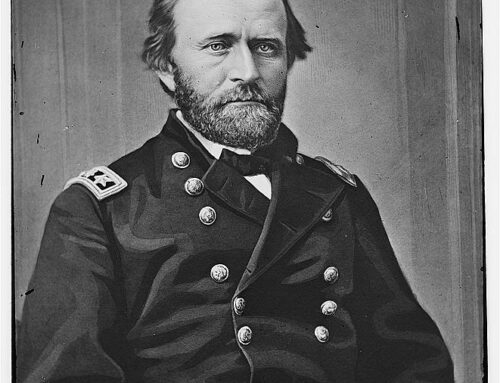
Confederate General Lewis Armistead
Armistead was born to a military family in New Bern, North Carolina in 1817. He was married twice, first to Cecilia Love and secondly to Cornelia Jamison. He had two children, one girl and one boy. Armistead was educated at West Point where he had a less than stellar career. He was the protagonist in the infamous plat over the head incident with Jubal Early that led to his expulsion.
If not for the Unions desperate need for officers he would have at least been delayed in leading men. He saw action in many Civil War battles the most important being Gettysburg. At Gettysburg, Armistead fought bravely and competently with General Pickett and the rest of the Confederate army.
A Masonic to the core, Lewis Armistead encountered fellow Masonic member Captain Henry H. Bingham of the Union army after being wounded charging the “Angle” at Gettysburg. This storied encounter with the enemy was fit for a novel and subsequent silver screen. Stories like this are what made the Civil War not only a tragic American story but also a term of endearment for both sides.
At Gettysburg, the two sides fought desperately and the loss of men on both sides was catastrophic. Yet near the end of the siege, there came over the battlefield a sense of American unity. The recounts of the battle have story lines in them that portray an enemy helping an enemy. Although there are other instances of this American perspective on many bloody battlefields, none were more poignant than the scenes at Gettysburg.
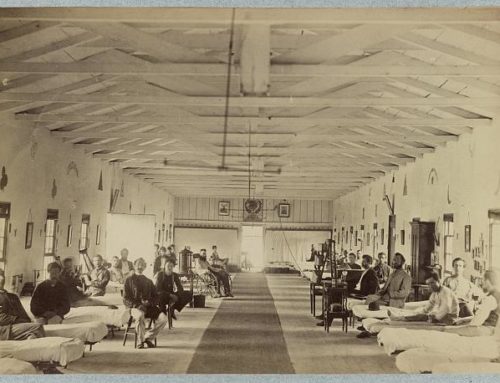
After The Battle of Gettysburg was over and the Union army had repelled the Confederates, Armistead was taken to a Union field hospital where he died from his wounds received in the battle. Shot three times while charging the Union forces at the wall, Armistead most likely died from pulmonary embolism or a combination of septic shock and heat exhaustion.
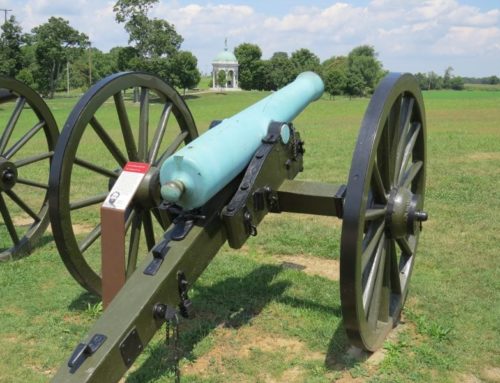
A monument was erected commending the spot where Lewis Armistead made his gallant penetration. Armistead is buried next to his uncle, Lieutenant Colonel George Armistead, at the Old Saint Paul’s Cemetery in Baltimore, Maryland. Armistead died in 1863 but his legacy lives on today in the hearts of so many that fought along side him.