(1815-1872)
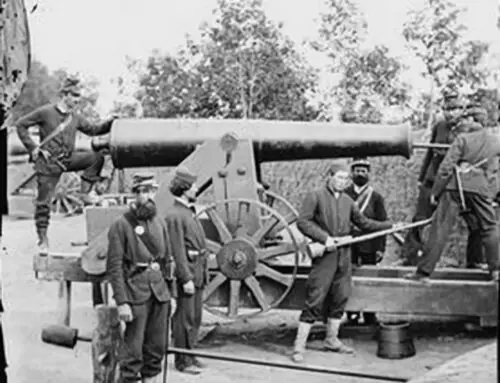
George Gordon Meade at the start of the Civil War, was assigned to command a brigade of Pennsylvania volunteers. Meade and his Pennsylvanians built defenses near Tenallytown, Maryland, part of the defenses of Washington.
In March 1862, his troops joined General McClellan’s Army of the Potomac on the Peninsula southeast of Richmond. Meade and his troops saw bitter fighting at the battles of Mechanicsville, Gaines’ Mill and Glendale where Meade was shot in his back and arm but refused to leave the battlefield.
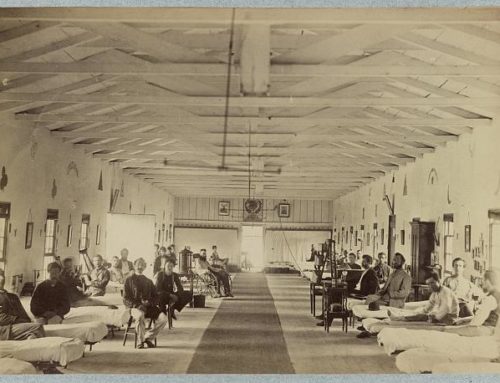
General George Gordon Meade was sent to and recovered in a Philadelphia hospital, he eventually was able to rejoin his troops during the Maryland Campaign.
He was placed in command of a division of “Pennsylvania Reserves”, Meade led his troops during the Battle of South Mountain, Maryland. Days later, he again led his troops during the Battle of Antietam on September 17, 1862. This battle was the single most bloody day during the entire war. Meade was forced to take command of the First Corps after their commanding officer was wounded during the battle.

Union General George Gordon Meade
General Meade was eventually assigned to command the Fifth Army Corps of the Army of the Potomac. As a corps commander he fought in the Battle of Chancellorsville in May, 1863. After this battle Meade marched his troops north in hot pursuit of Lee’s Army of Northern Virginia, to Frederick, Maryland. On June 28, 1863, he was awakened by a courier from Washington who delivered a letter stating that he was now in command of the Army of the Potomac. Needless to say he was a bit surprised by this. At once he began issuing orders and continuing on the army’s mission of finding Lee and defeating him once and for all.
The Battle of Gettysburg took place a mere three days after General Meade took command. He used his most qualified corps commanders, Meade stopped Lee’s attacks on the second day of the battle. The following day, Lee’s last attack the infamous Pickett’s Charge ended in failure for the south. After this defeat General Meade was criticized for his caution in pursuing Lee and perhaps ending the war.
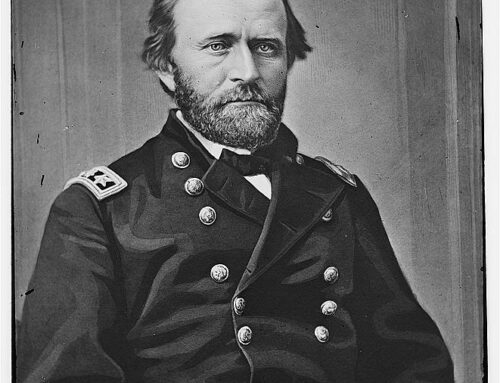
In the spring of 1864 General Grant took command of all Union forces. General Meade felt his authority was taken away from him by his superior officer. However, he maintained tight command of the army and worked very hard to carry out General Grant’s orders.
In August of 1864 Meade was promoted to major general. In 1865 after Lee had abandoned Richmond, George Gordon Meade quickly went after him to force a surrender. On April 9, 1865, he was with the army at Appomattox Court House when the news had reached him that Lee had finally signed surrender terms with General Grant.
After the war General George Gordon Meade was put in command of military districts on the east coast. On October 31, 1872 Mead developed pneumonia. He died on November 7, 1872.