September 17, 1862
The battle of Antietam took place on September 17, 1862. This was Confederate General Robert E. Lee’s first invasion of the north. Following his recent victories over the Union during the Seven Days battles and Second Manassas, Lee wanted to continue his good fortunes with an attack into Maryland.
The bloodiest day in the Civil War was the Battle of Antietam.
The bloodiest battle of the Civil War was the Battle of Gettysburg.
On September 3, 1862 Robert E. Lee crossed the Potomac with 40,000 troops. Lee had several reasons for taking the war north. First he wanted to liberate Maryland, which was a slave holding border state with many southern sympathizers. If he could win a great victory here he could add another state to the Confederate cause. He also wanted to prove to the great European powers that the Confederacy was a legitimate country.
A detailed look at the battle of Antietam is #ad To Antietam Creek: The Maryland Campaign of September 1862

A big victory on Union soil would surely do just that. If Europe recognized the south as an independent country they would begin to send supplies and weapons, which the Confederacy desperately needed.
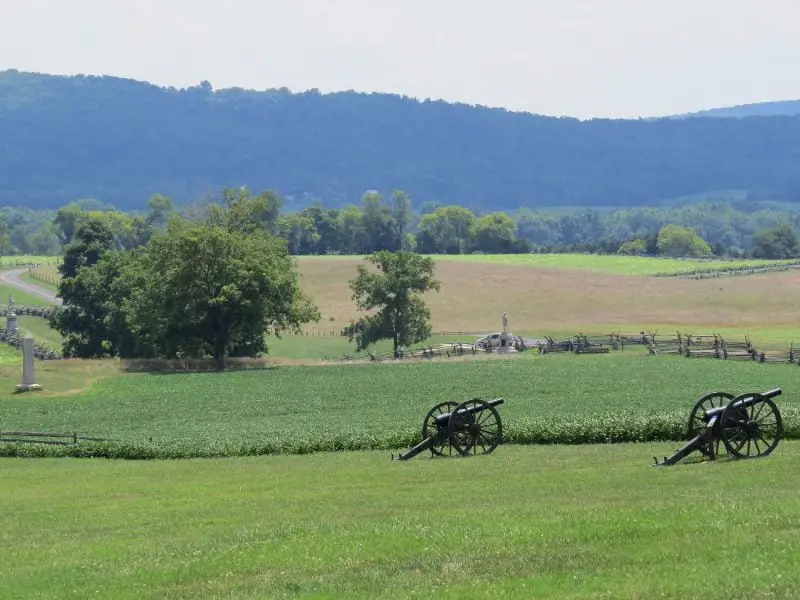
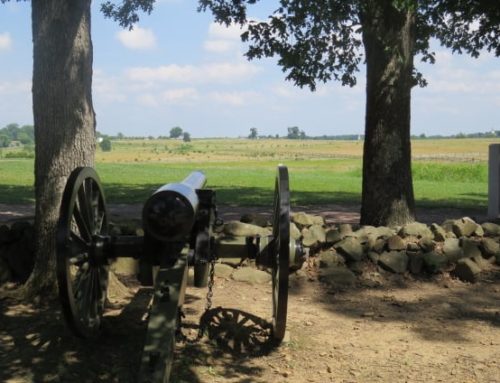
Antietam Battlefield
There would also be a chance that a European power could enter the war on the side of the south thus ensuring their victory and independence. It was of vital importance that the south gain a great victory in Maryland. On the other hand it was just as vital for the north to stop the south from achieving anything other than a defeat in their territory.
Robert E. Lee Divides His Army before Arriving at Antietam
Arriving in Frederick Maryland Lee decided to split his army in half. He sent General Stonewall Jackson south to capture Harpers Ferry. Taking Harpers Ferry would allow supplies to freely flow from the Shenandoah Valley to Lee’s army. After Jackson defeated the 12,000-man garrison at Harpers Ferry he was to join back up with Lee and the rest of the army.
Sending Jackson south Lee continued with the other half of his army north toward Hagerstown Maryland. On September 13th a Union soldier stumbled upon three cigars wrapped around a piece of paper. This was lucky for the soldier because now he had three cigars to enjoy. It was the paper the cigars were wrapped around that was much more interesting.
This lucky soldier had found Lee’s Special Order number 191. This order detailed the plan of dividing the Army of Northern Virginia to attack Harpers Ferry. This piece of paper made it’s way up the ranks and eventually landed in the lap of the commander of the Army of the Potomac General George McClellan
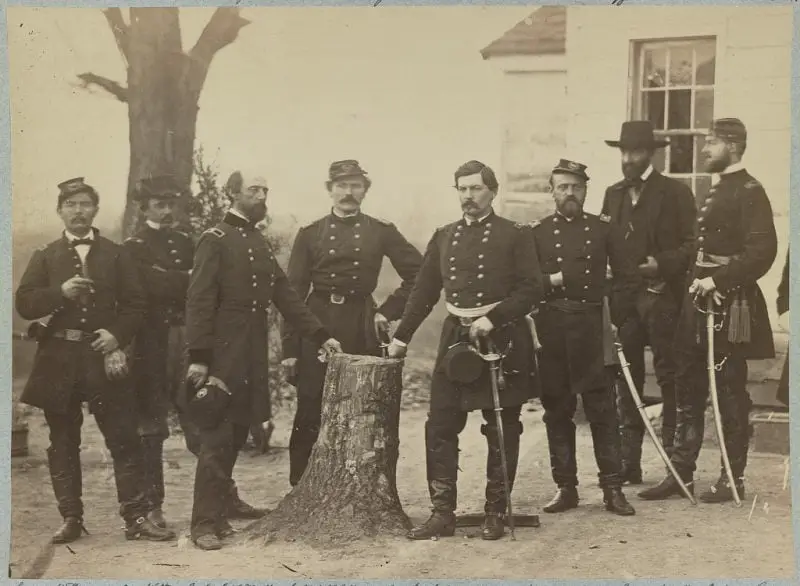
George McClellan and his Staff
McClellan exclaimed after seeing it that “Here is a paper with which, if I cannot whip Bobby Lee, I will be willing to go home.” For all of his confidence and boastfulness McClellan did…nothing. He did not attack he simply did nothing.
It wasn’t long before Lee had found out that his orders were intercepted from a southern sympathizer. He quickly acted and moved his troops into a defensive position near Sharpsburg Maryland with his back against the Potomac River.
George McClellan was on the way to engage Lee. Slowly but surely he was coming with his 80,000 strong army. On September 16th General Thomas Stonewall Jackson had rejoined Lee’s army after defeating the Union garrison at Harpers Ferry. Robert E. Lee now had a force that numbered 40,000.
If you like battlefield maps check out #ad The Maps of Antietam: An Atlas of the Antietam (Sharpsburg) Campaign, including the Battle of South Mountain, September 2 – 20, 1862 (Savas Beatie Military Atlas Series)

Battle of Antietam Begins
At dawn on September 17th George McClellan finally attacked Lee starting the battle of Antietam. He ordered General Joseph Hooker to attack the Confederate left with three divisions of I Corps. Each division had a target, the Dunker Church.
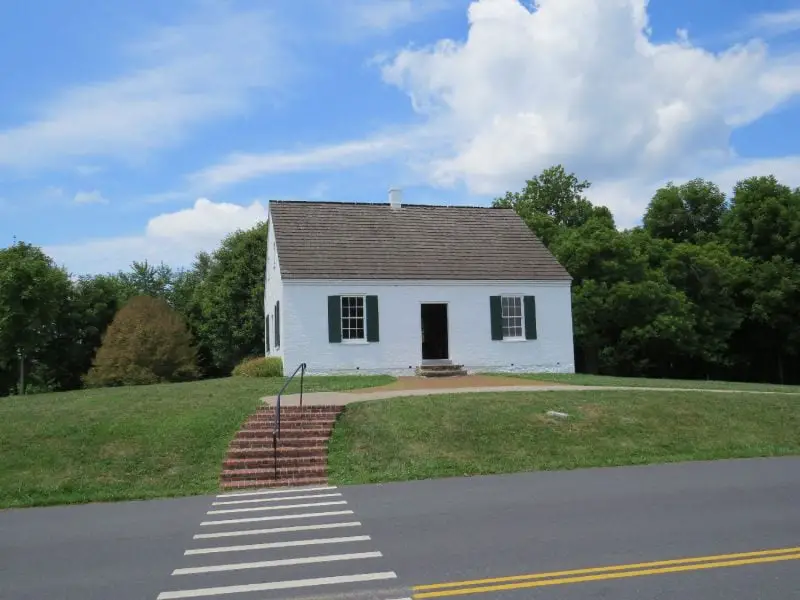
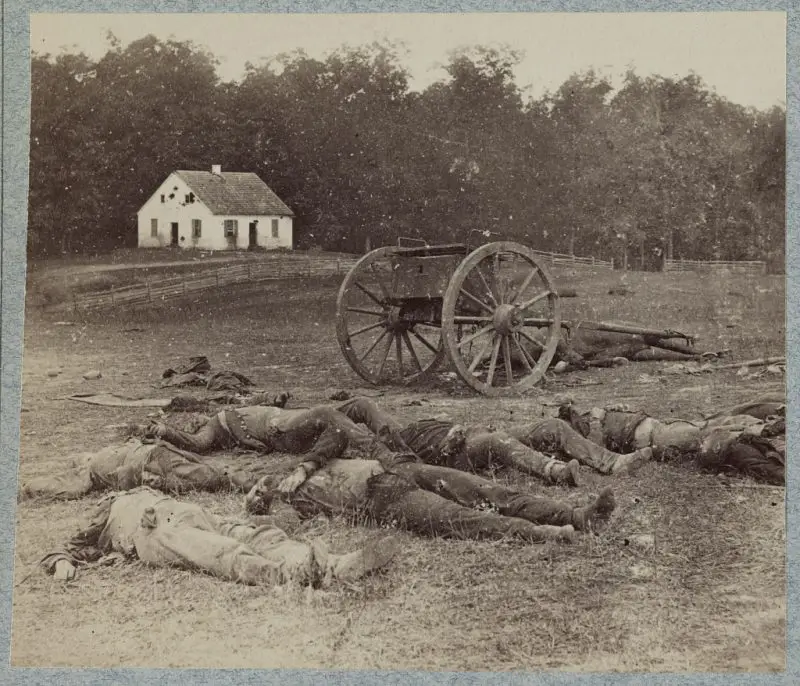


One division attacked the West Woods initially driving the rebels out of the woods and rushing to take Dunker Church. Confederate General John Bell Hood and his Texas veterans quickly counterattacked stopping the advancing Union troops. The fighting in the woods teetered back and forth.
Meanwhile another Union division under General Mansfield attacked through Miller’s Cornfield. This cornfield saw the most bloody and brutal fighting of the entire war. The corn was head high and very thick.
Troops on both sides blindly fought each other in hand-to-hand combat, shot and shell ripped through the corn hitting soldiers from all sides. Confederate General Mansfield was killed in the cornfield and General Hooker was hit.
Despite the brutal fighting Union troops scrambled out of the cornfield and successfully captured Dunker Church. Despite this success the three divisions of I Corps practically ceased to exist after Antietam.
At around mid-morning the 2nd Corps under General Sumner started an attack on Lee’s center. The attack started at Dunker Church attacking D.H. Hill’s division who had taken up defensive positions in a sunken road near the church.
The Bloody Lane at Antietam
The rebels in the sunken road at Antietam were in a very good position to fire on the advancing Federals. The Confederates repulsed attack after attack by the Union troops inflicting extremely heavy casualties.
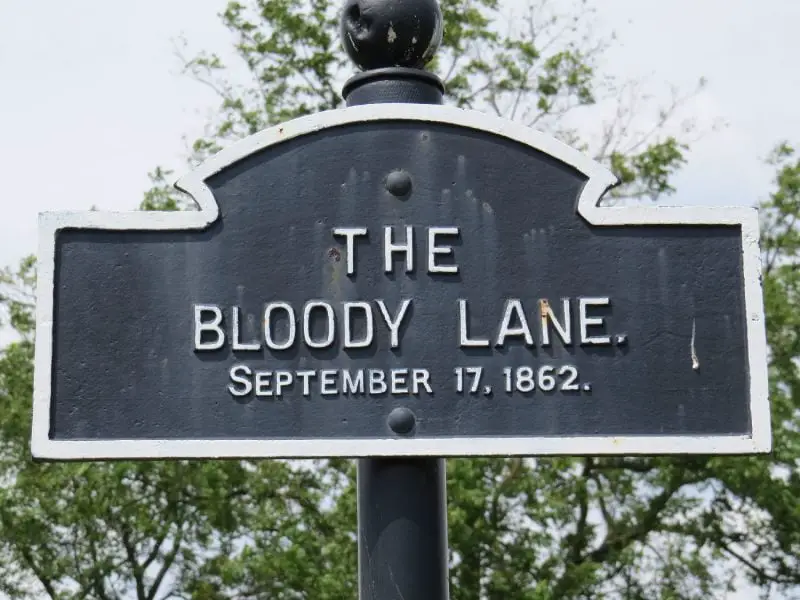
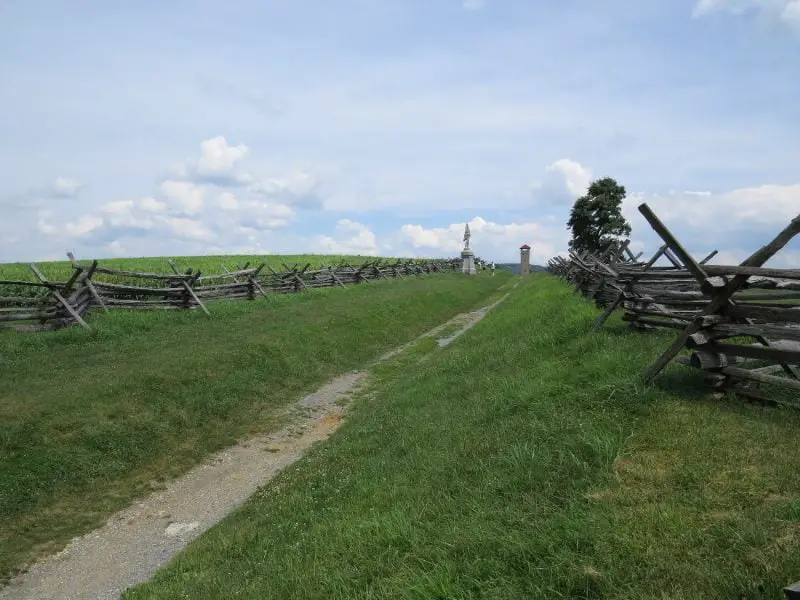
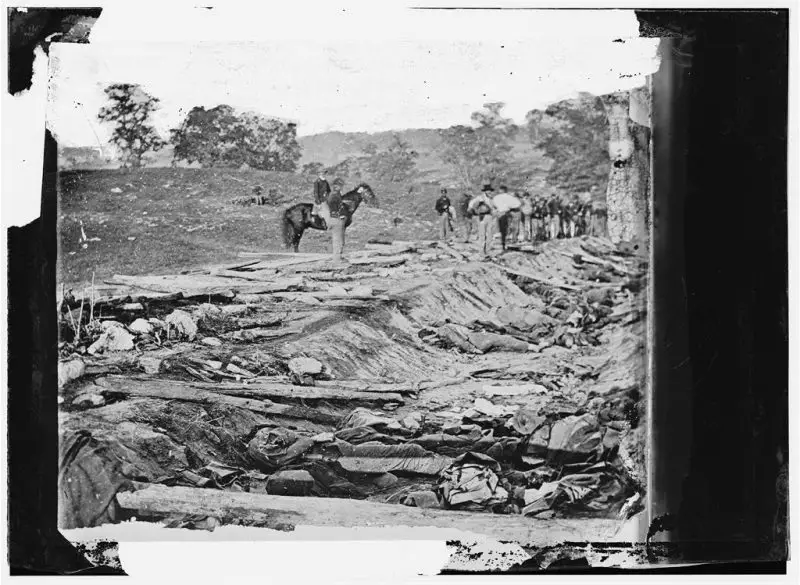
Union troops eventually were able to get around the road and found a spot where they could fire straight down the lane into the rebels. This created chaos in the sunken road and it quickly filled with rebel dead.
This stretch of road was forever to be remembered as Bloody Lane. At this point the entire confederate line was faltering and ready to collapse under the sheer weight of the Union attack.
If McClellan had sent reinforcements to the center and continued the attack he would have easily defeated Lee in a great victory. He chose however, not to send reinforcements saying that it was not “prudent.”
Burnside Bridge at Antietam
Meanwhile on the Confederate right Union General Ambrose Burnside ordered his men across a bridge over Antietam Creek. Burnside ordered his 12,500 men across the bridge.
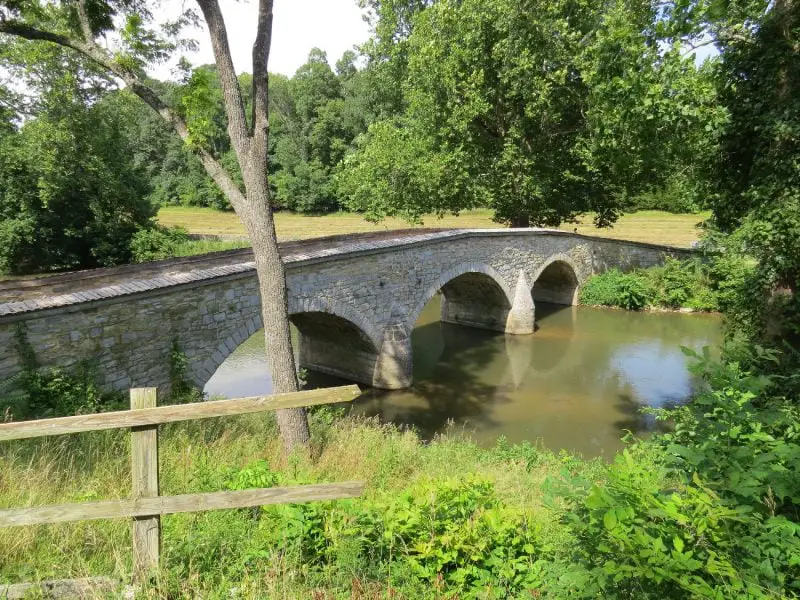
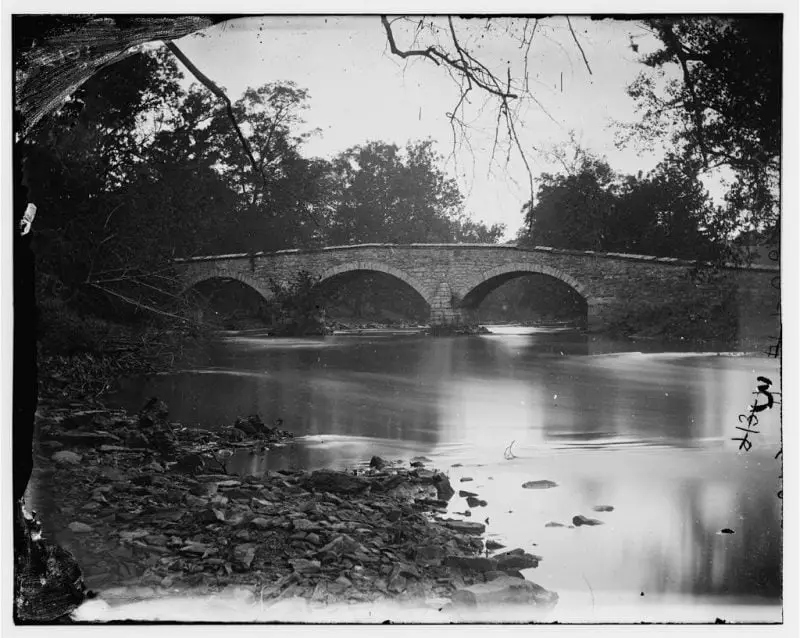
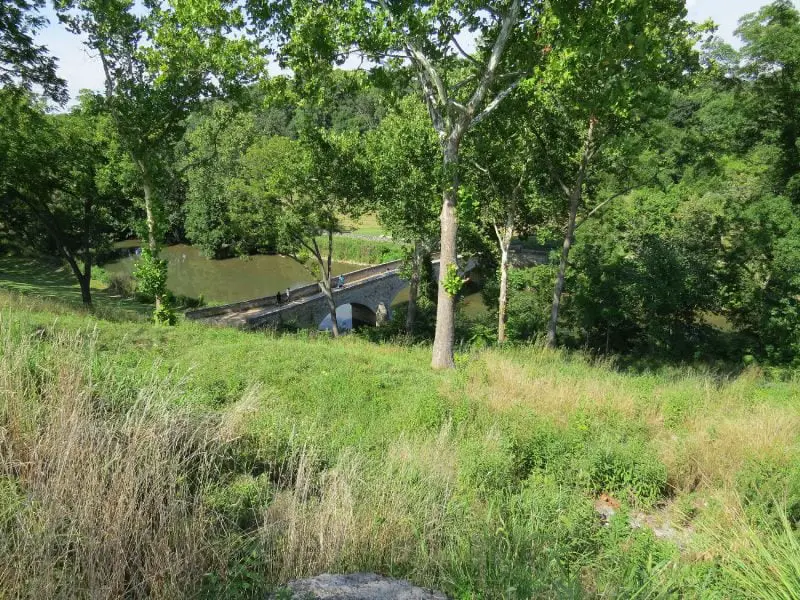
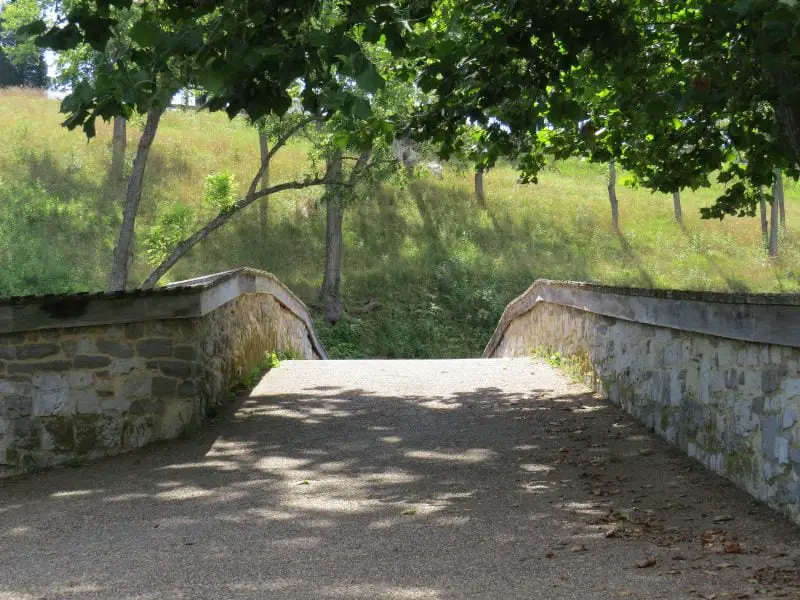
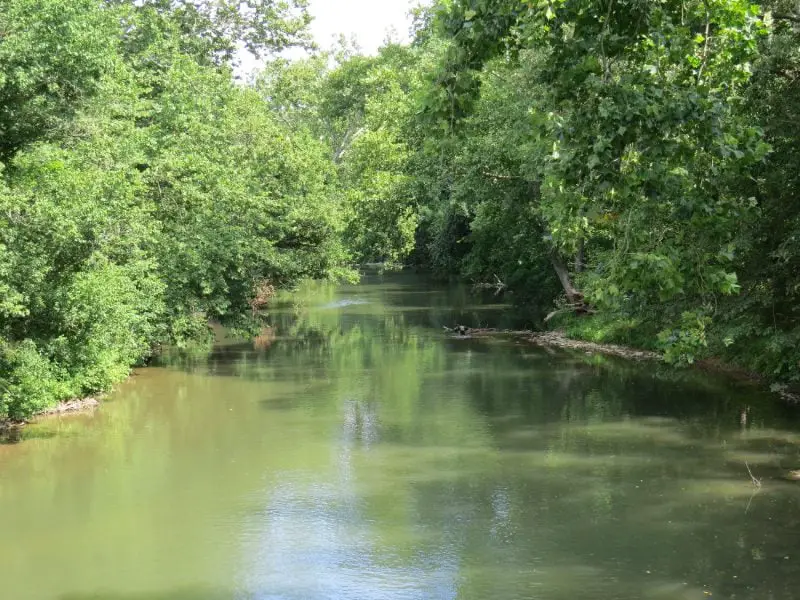
The bridge was being defended by two Georgia regiments under the command of General Robert Toombs which numbered around 400 men. The Georgians had taken up defensive positions in a stone quarry overlooking the bridge.
For three hours the Confederates repulsed the Union attempts at crossing the bridge inflicting heavy casualties on the Federals. The Confederates killed or wounded hundreds of men as they tried to run across the bridge. It was only after they began to run out of ammunition that the rebel troops on the hill had to withdraw. Burnside’s men were able to cross the bridge at that point.
Antietam Creek is very shallow and soldiers could have easily walked through it to the other side at many locations. Burnside however wanted to use that bridge. This might be one of the reasons historians consider Burnside one of the worst military leaders of all time.
The bridge has been known as Burnside Bridge ever since.
Confederate Reinforcements arrive at Antietam
At this point victory was in sight for the Union as they smashed into the Confederate right. It was also at this point that the final Confederate division returning from the capture of Harpers Ferry arrived on the scene.
Confederate General A.P. Hill and his three thousand men immediately attacked the flank of the Union troops blunting their advance. Burnside begged McClellan for reinforcements but was refused.
This final clash was the end of the battle of Antietam. In the end the south had lost 2,700 dead 9,024 wounded and 2000 missing. The north had 2,108 dead 9,549 wounded and 753 missing.
This all occurred in a span of 12 hours. There has never been a bloodier day in American history.